Style notes / Fit guide & wardrobe exercise
Body shapes and clothing: a guide to fit, figure and proportion
Explore five familiar shape descriptions, useful fit checks and different outfit silhouettes. Start with comfort and the effect you want.
A useful wardrobe decision starts with the garment in front of you. Learn what the label describes, how fabric holds its shape and where hems or seams meet your own proportions. These are tools for comfort and preference, not rules for an ideal figure.
Body-shape names are optional shorthand, not complete descriptions. Begin with comfort across the shoulders, waist and hips, then test sitting, walking and reaching. Use the guide to explore the outline you enjoy, rather than trying to change your body.
Explore five familiar shape descriptions, useful fit checks and different outfit silhouettes. Start with comfort and the effect you want.
Silk describes a fibre; satin describes a weave. That distinction is more useful than assuming either word tells you everything about weight or drape. Learn to look at the cloth and the construction together, including lining, canvas and the seams that create room.
One names a fibre; the other describes a weave. Learn what a product description tells you—and what it leaves open.
A visible motif does not tell you how it was made. Learn what to inspect before naming a patterned fabric.
The supporting layer is different from the lining. Here is how to ask useful questions without reducing a jacket to one specification.
Comfort, opacity and movement begin beneath the outer surface. A guide to observing the layer inside.
A flat piece of cloth needs shaping to become a fitted garment. Follow the lines that make that possible.
The distinction becomes clearer when you look at where excess fabric is organised, fixed or released.
Use the colour inside a woven cloth to build an outfit, rather than treating the jacket as one flat shade.
Try trousers with their intended shoes before judging the break. Compare a coat open and closed over the actual skirt beneath it. Small changes at these meeting points can alter the whole outline without replacing the outfit.
The small fold above a shoe can change the line of a whole outfit. Judge trouser length with the footwear you intend to wear.
A skirt does not have to disappear beneath a coat. Decide whether the two lengths should continue, interrupt or frame each other.
You do not need a chart prescribing one necklace for every top. Begin with the space between two lines.
Think about the bag’s position, depth and structure—not only its colour or size.
A runway look can be a reference for a single choice: texture, repetition, scale or contrast. These exercises begin with existing clothes and let you keep only the parts that work for you.
Use surface, spacing and proportion to give a single-colour outfit depth.
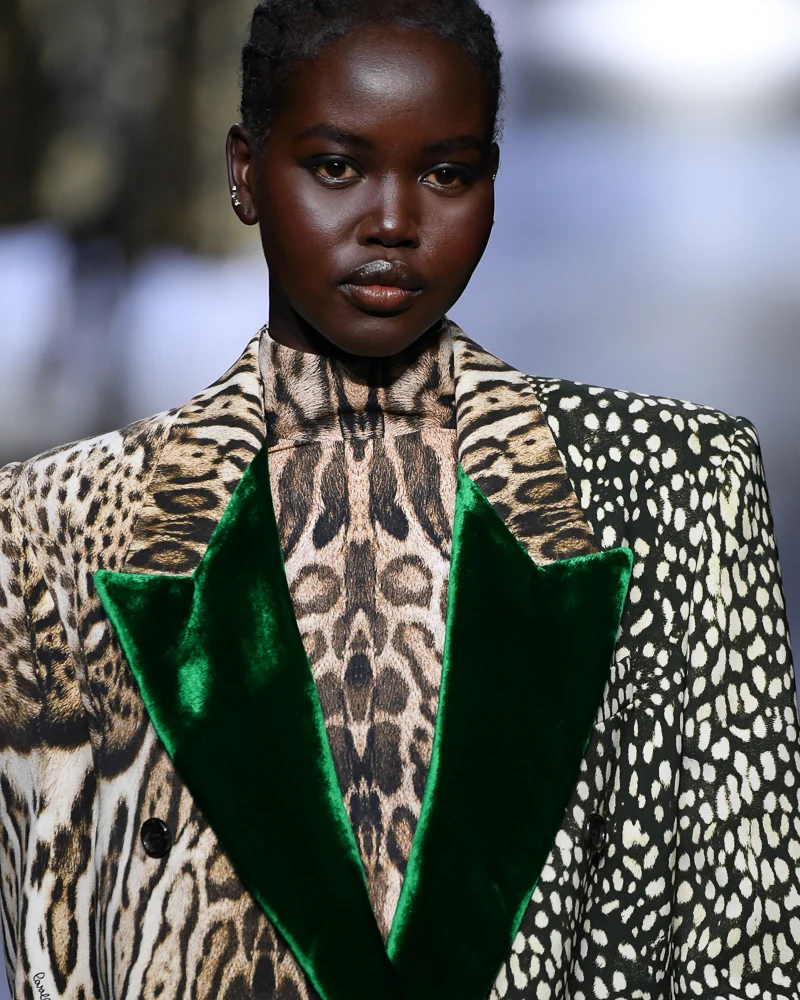
An archival Cavalli close-up is the starting point for an exercise in scale, spacing and a quiet border.
Test a piece against real situations before calling it versatile. A short experiment can reveal what you actually need from it.
A more useful way to look at a runway image, from the overall line to the smallest interruption.
A three-step method for turning a catwalk reference into something that feels like your own wardrobe.
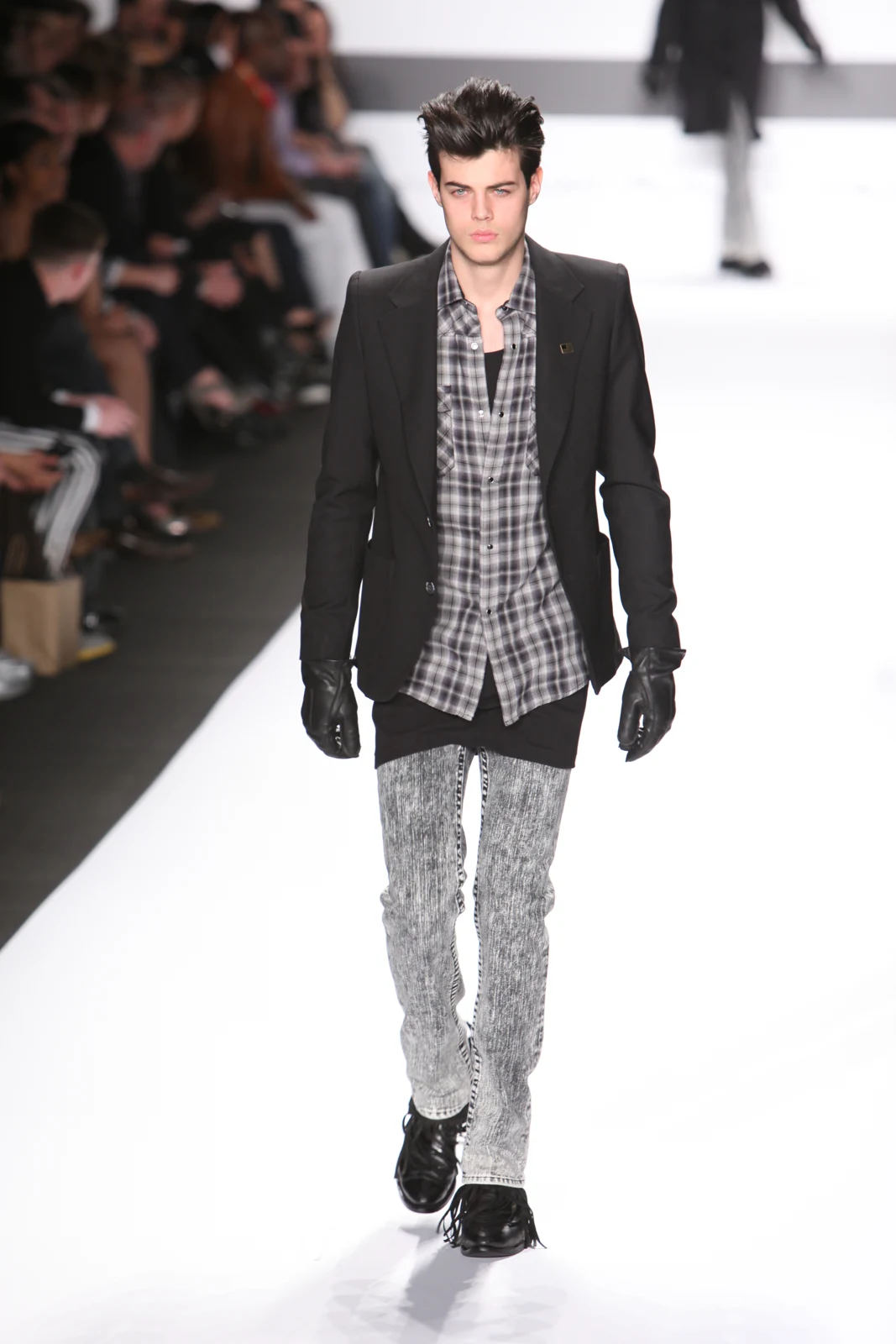
What an old runway image can teach you—and what a single frame cannot prove.

