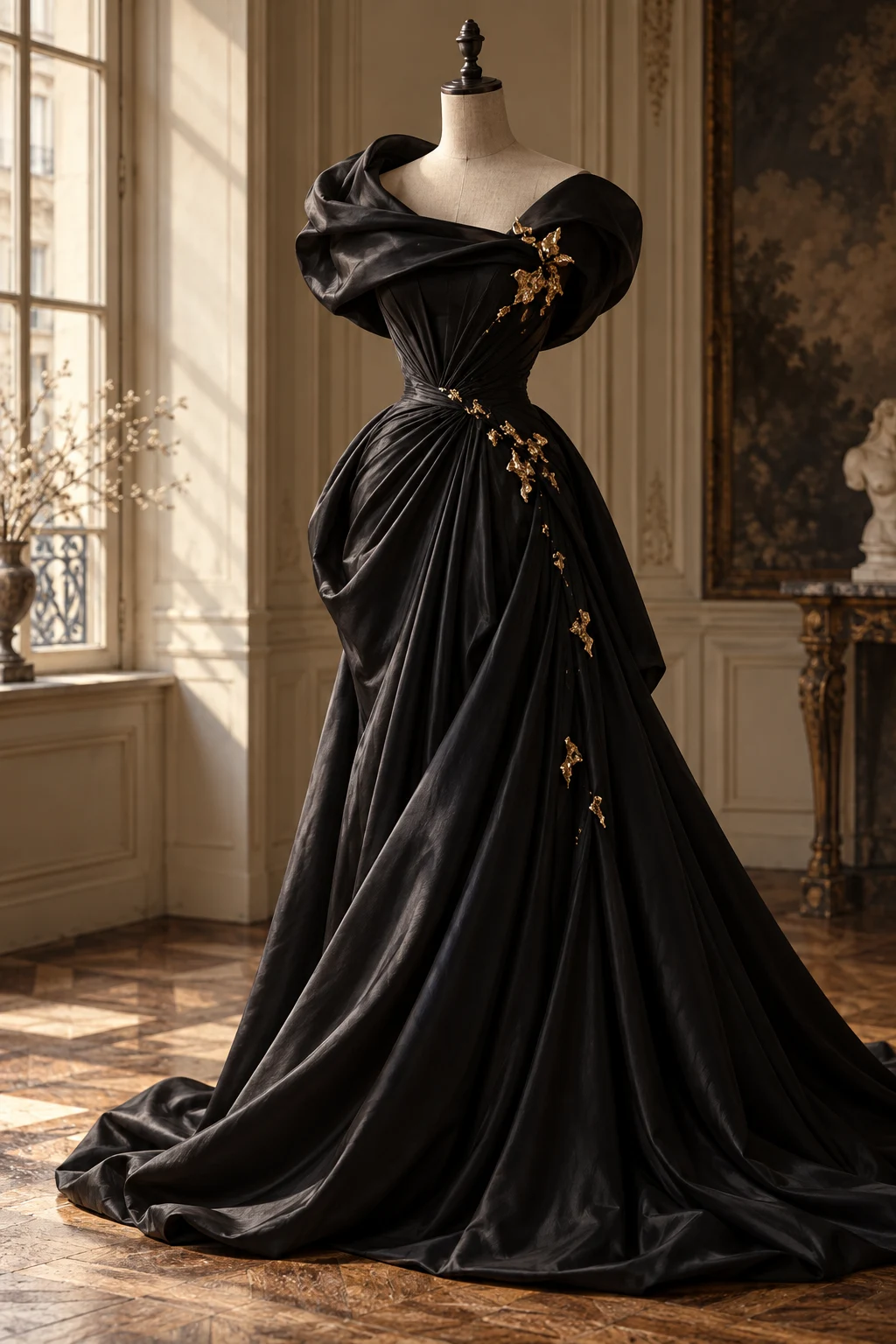
Some lines on a garment are decorative; some join pieces; some help create room around a three-dimensional body. A dart or a shaped seam can be visually quiet while doing a substantial part of the work.
Two routes to shaping
A dart takes in a shaped wedge of fabric, usually tapering towards a point. A princess seam distributes shaping along a longer curved seam joining panels. Seamwork’s patternmaking guide shows how dart shaping can be transferred into a princess-seam arrangement. The two approaches can solve related problems while creating different visible lines.
Look for where the line ends
A dart usually stops within a panel. A princess seam continues through more of the garment. That difference can change how the eye travels over a bodice or dress. One may leave a large uninterrupted area; the other may divide it into longer sections.
Neither is inherently more elegant or better made. The appropriate choice depends on design, fabric, intended fit and the pattern. A smooth-looking front can still involve substantial shaping elsewhere.
Reading a fitting issue without guessing the fix
If a garment pulls or forms an unexpected hollow, note where the effect occurs and whether it changes when you move. A dart position, overall size, shoulder balance, fabric behaviour or another factor could contribute. A photograph alone rarely establishes the complete cause.
For alterations, wear the underlayers and shoes you expect to use and ask a fitter to examine the garment on you. Moving or changing a shaping line can affect more than the small area that first drew your attention.
A close-looking checklist
- Identify which lines are seams and which are folds or printed marks.
- Notice whether shaping appears on both front and back.
- Check how the line relates to a pocket, fastening or waist seam.
- Observe it while standing naturally, not only in a posed photograph.
These observations can make shopping descriptions and museum records easier to understand. They are not an invitation to judge a body against a garment. If a shape does not work comfortably for you, the garment may need a different cut or adjustment.
For the wider relationship between cloth direction and fit, continue with Madeleine Vionnet and bias cutting.
Sources & further looking
Seamwork — Turning darts into princess seamsHistorical, material and collection references are linked above. Styling exercises and interpretations are our editorial suggestions.