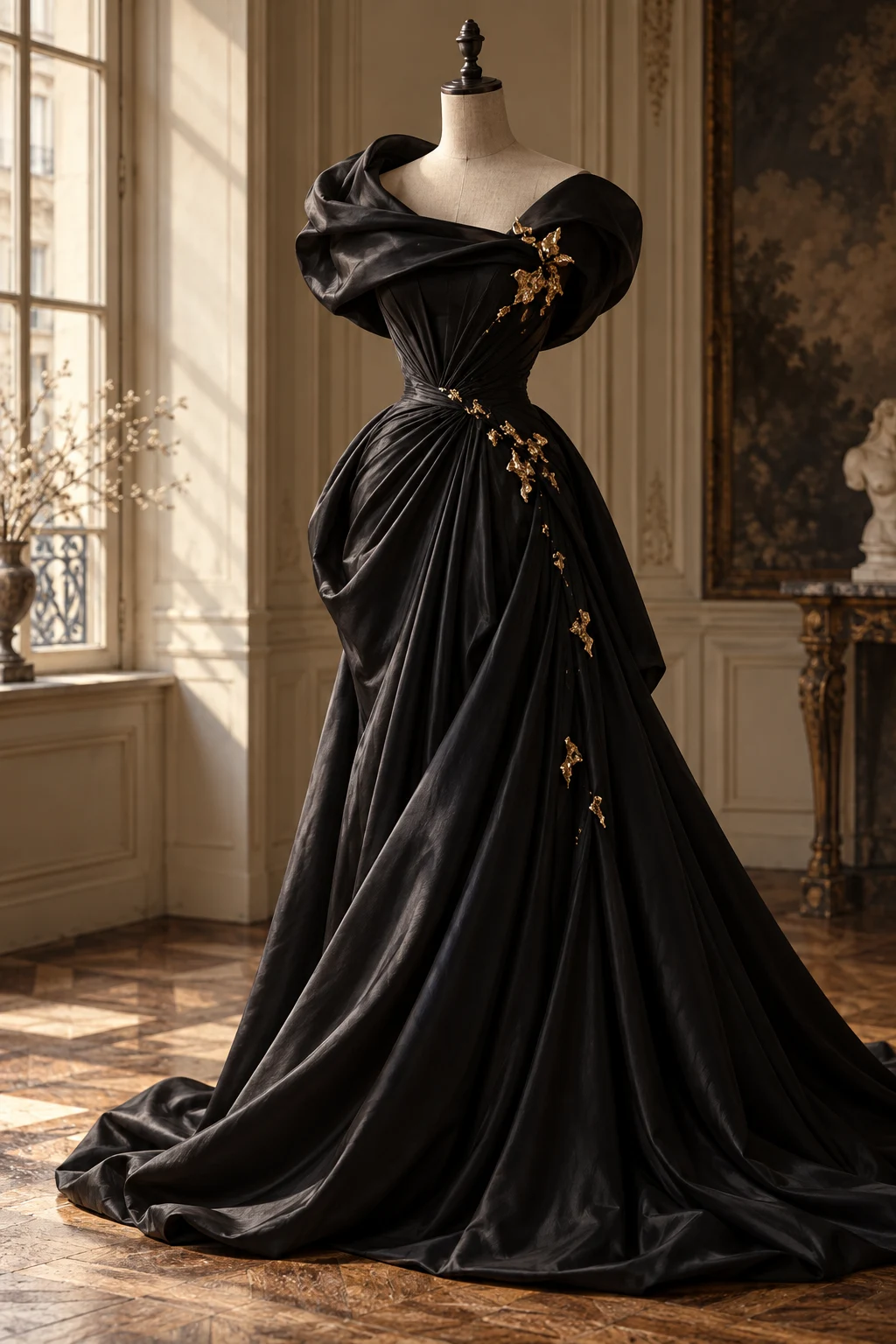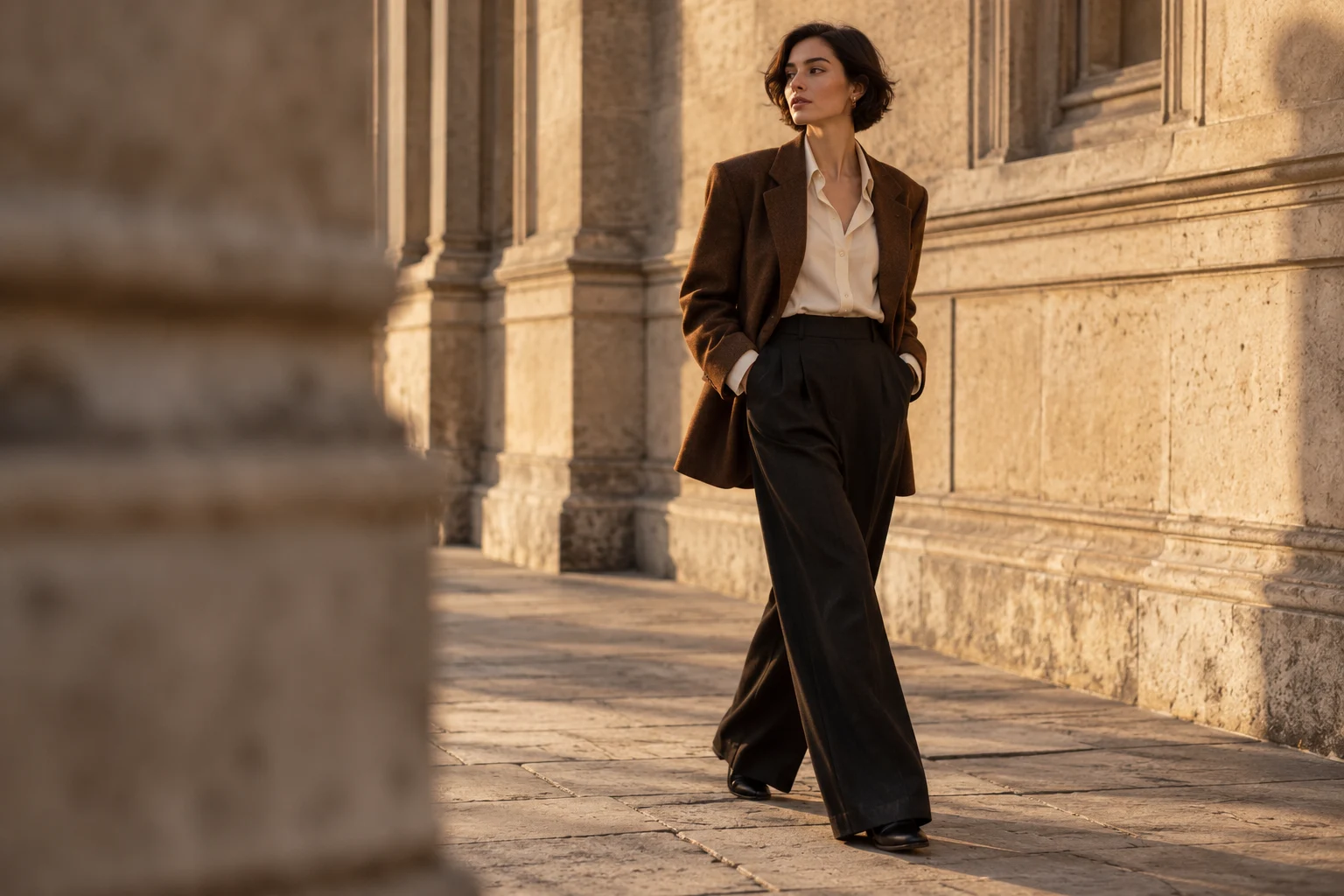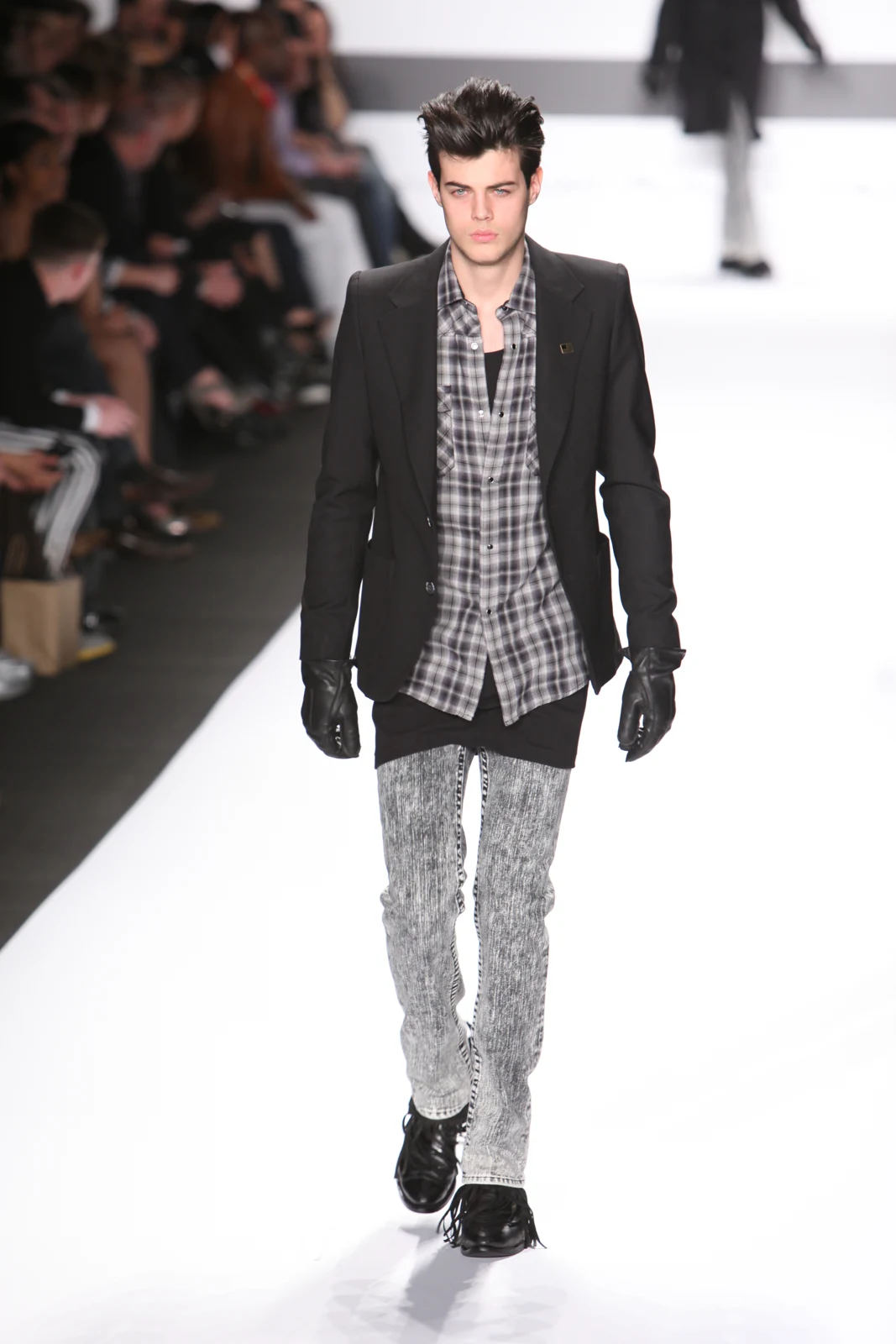
A runway photograph is both a record and a selection. It freezes one person at one instant, from one position, under a particular light. That makes it valuable for studying shape and styling, but incomplete as evidence of movement, texture and the collection as a whole.
1. What is actually visible?
Begin by naming observations without interpretation: a hem falls above or below a knee; one layer ends before another; a surface reflects light; a shoulder appears wider than a waist. Keep “looks expensive”, “feels modern” and “must be silk” out of this first pass. They are judgements or material guesses, not directly established facts.
The William Rast image above comes from New York Fashion Week in February 2009. Its date belongs to the caption. It should not be used as evidence that the same look appeared in 2026. An archive can inspire a contemporary experiment without pretending to be current reporting.
2. What does the frame leave out?
A front view may hide a fastening, seam or back panel that changes how the garment works. It cannot reliably establish weight or comfort. A close-up can tell you more about a surface but less about proportion. Look for another angle or an official show video before making a confident claim.
Even colour deserves caution. Stage lighting, camera settings and your screen can all affect the shade you see. Treat a photograph as a starting point for a palette rather than a calibrated textile sample.
3. Which relationship could travel?
Translate a relationship rather than collecting a shopping list. A narrow shape beneath a wider one, a soft fold beside a hard edge, or a repeated dark colour at the top and bottom of an outfit can be tested with different garments.
Build a reference you can revisit
Record the house, season if verified, photograph date, photographer and source. Separate your notes from the original caption. When you return to the picture a year later, you will know which parts were facts and which were your own reading.
The benefit of an archive is not that everything comes back unchanged. It is that looking at another moment can loosen the assumptions of your own.
Sources & further looking
Wikimedia Commons — William Rast runway photograph and provenanceHistorical, material and collection references are linked above. Styling exercises and interpretations are our editorial suggestions.