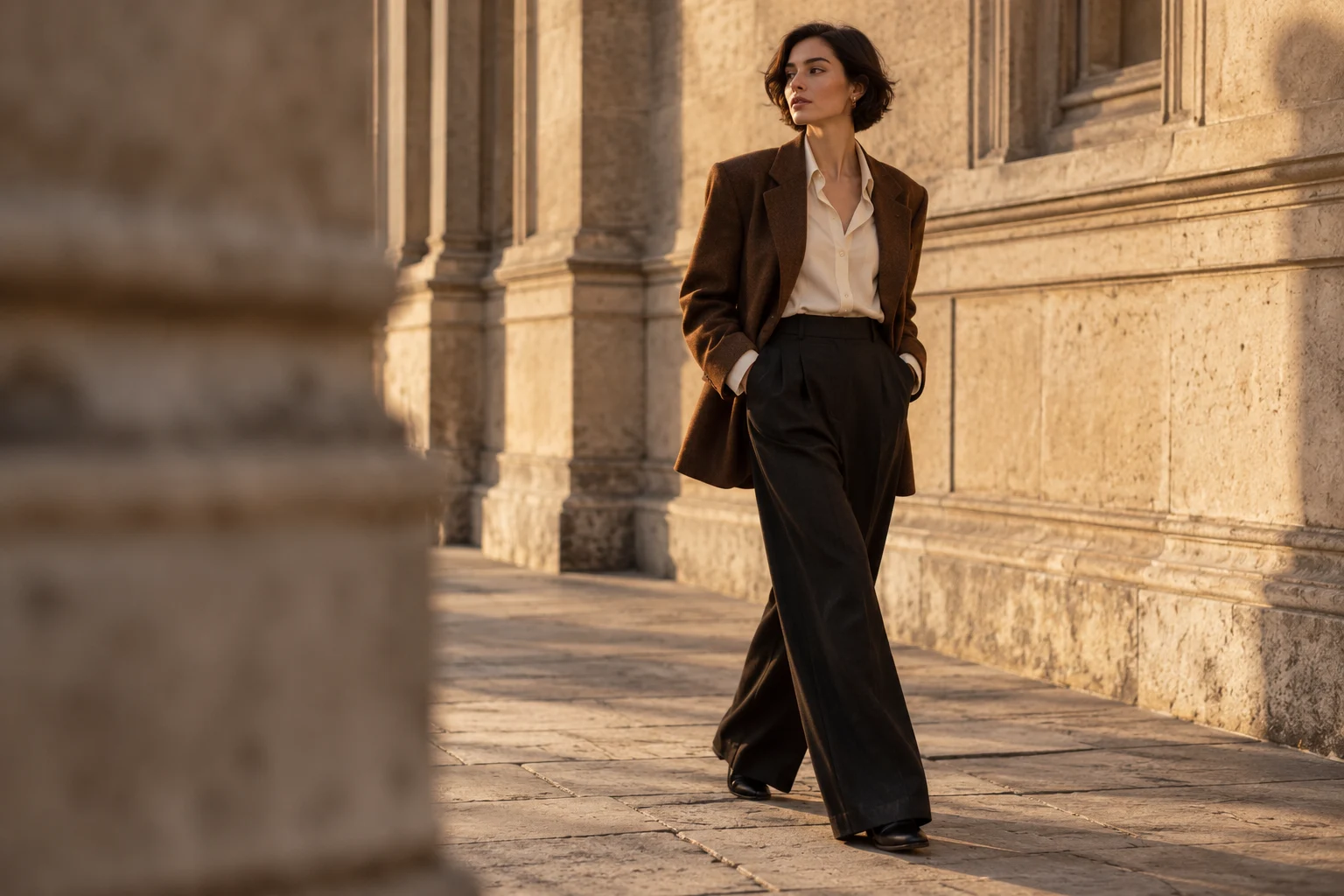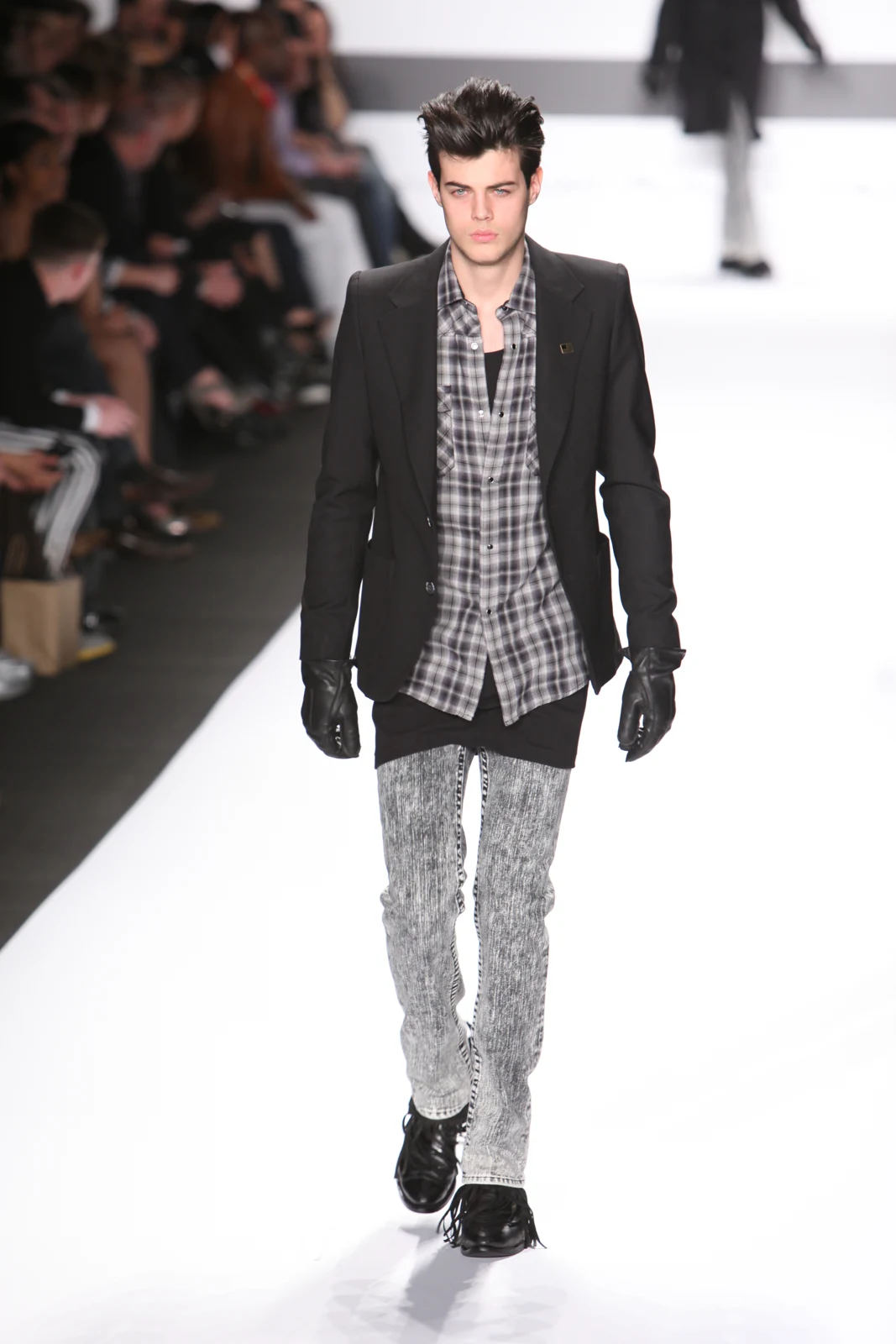
An all-black outfit can look beautifully clear in the mirror and disappear into a dark block in a photograph. Before adding jewellery, look at the surfaces. A slight difference between matte, softly textured and reflective fabric may give the outfit all the definition it needs.
Three surfaces are a starting point
Lay out a smooth trouser, a textured knit and a shoe with a little sheen. This is an experiment, not a rule that every outfit needs exactly three textures. Look for a distinction you can see from a few steps away.
If the knit is very bulky, keep the next layer roomy enough to sit over it. Surface interest is not useful if the outfit becomes uncomfortable. Check the shoulders and elbows while moving.
Use the spaces between garments
A neckline, an exposed wrist or a small change in hem length can separate dark areas without introducing another garment. Work with the coverage that feels right for you. The idea is visual spacing, not a requirement to show skin.
Check under different light
Black garments can have different undertones, and a mismatch may become more visible outside. Sometimes that variation creates depth; sometimes it looks accidental. Put the pieces together in daylight and decide whether you want continuity or contrast.
When to add a focal point
If the silhouette and textures already feel clear, a large accessory may be unnecessary. If you want a focal point, choose one location: neckline, wrist, waist or feet. Then step back again. The strongest detail is usually the one you can actually notice.
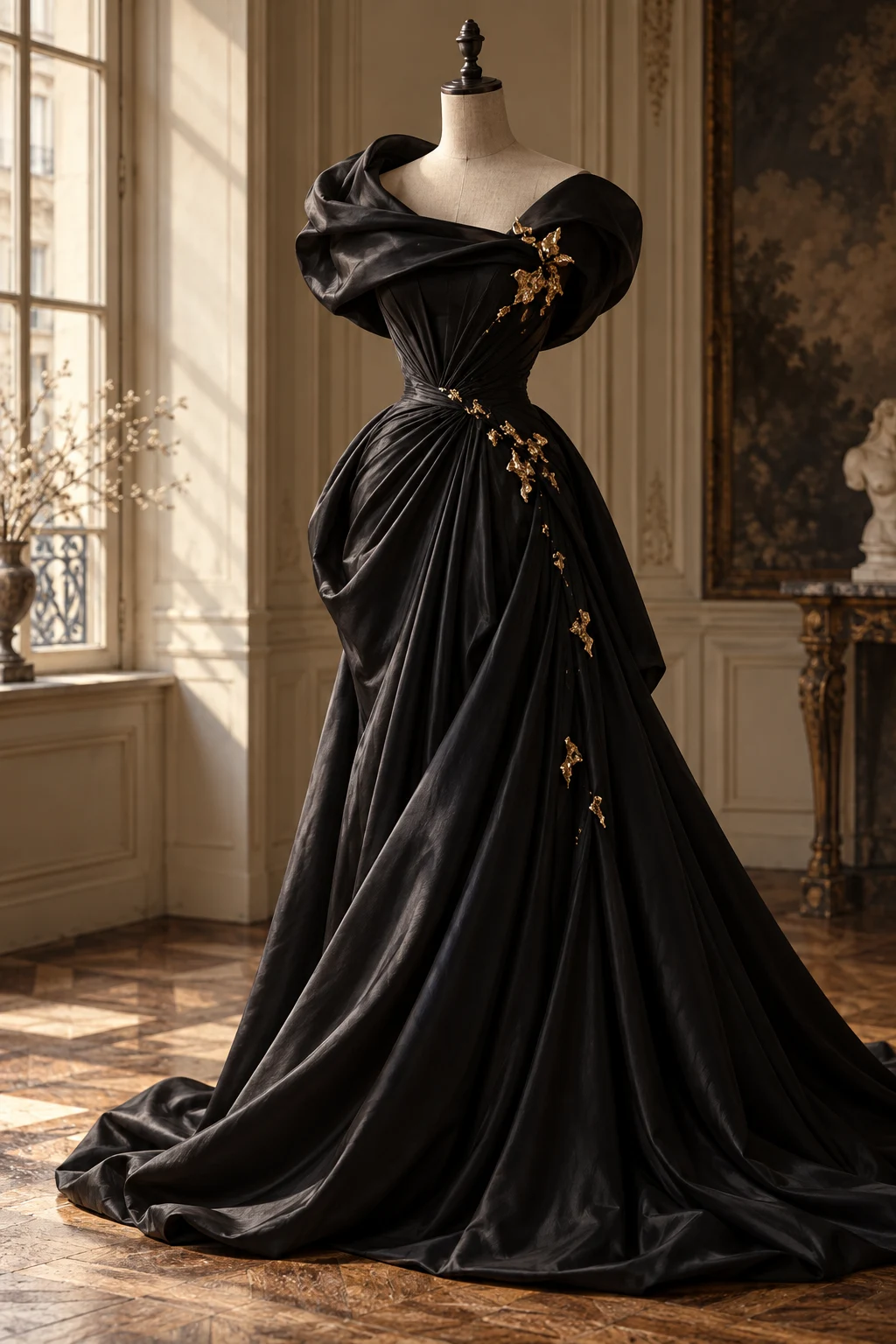
This approach is equally useful when looking at eveningwear. Ask what creates separation within the dark silhouette before focusing on decorative details. You will often find that the shape and the way light meets the fabric are doing most of the work.