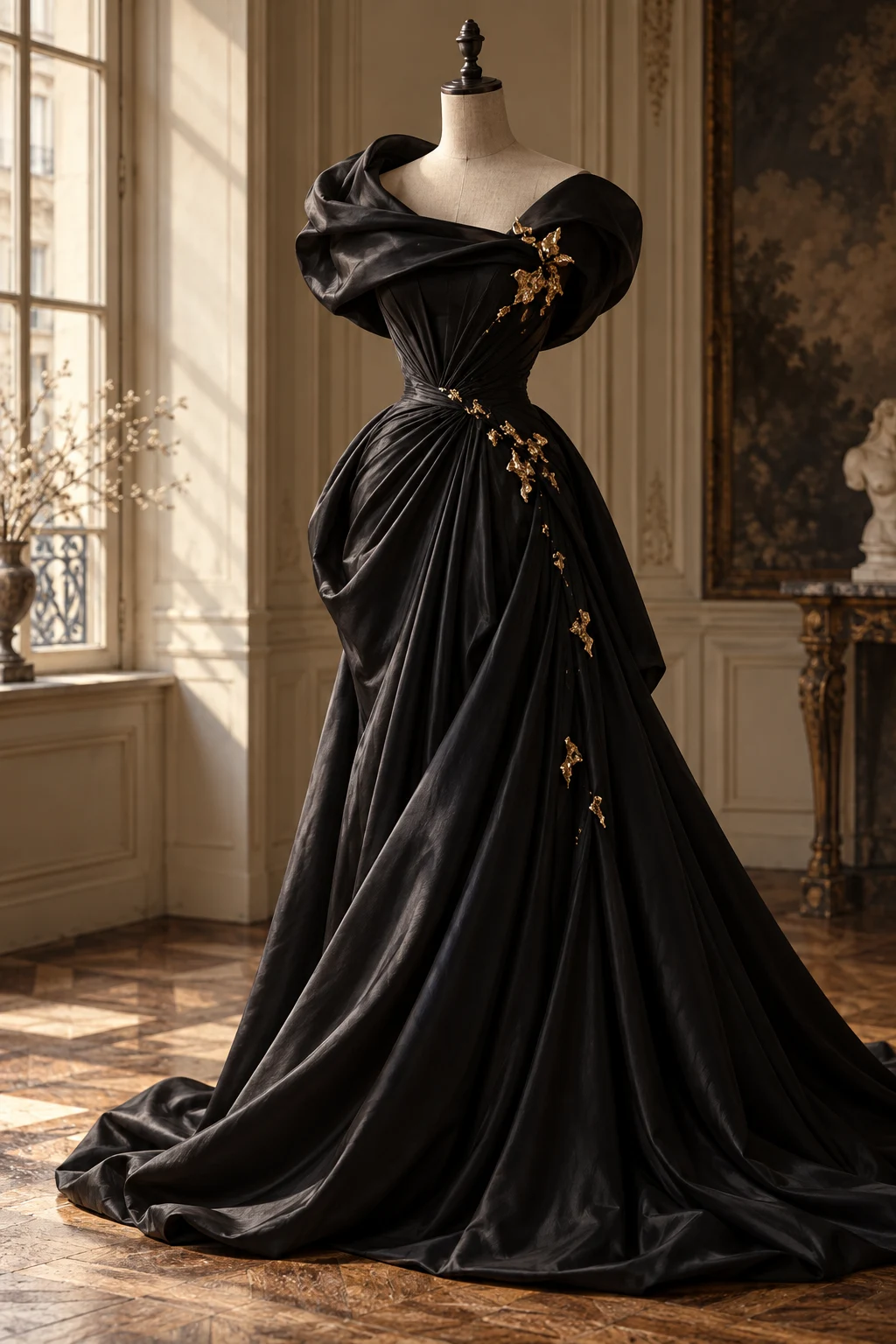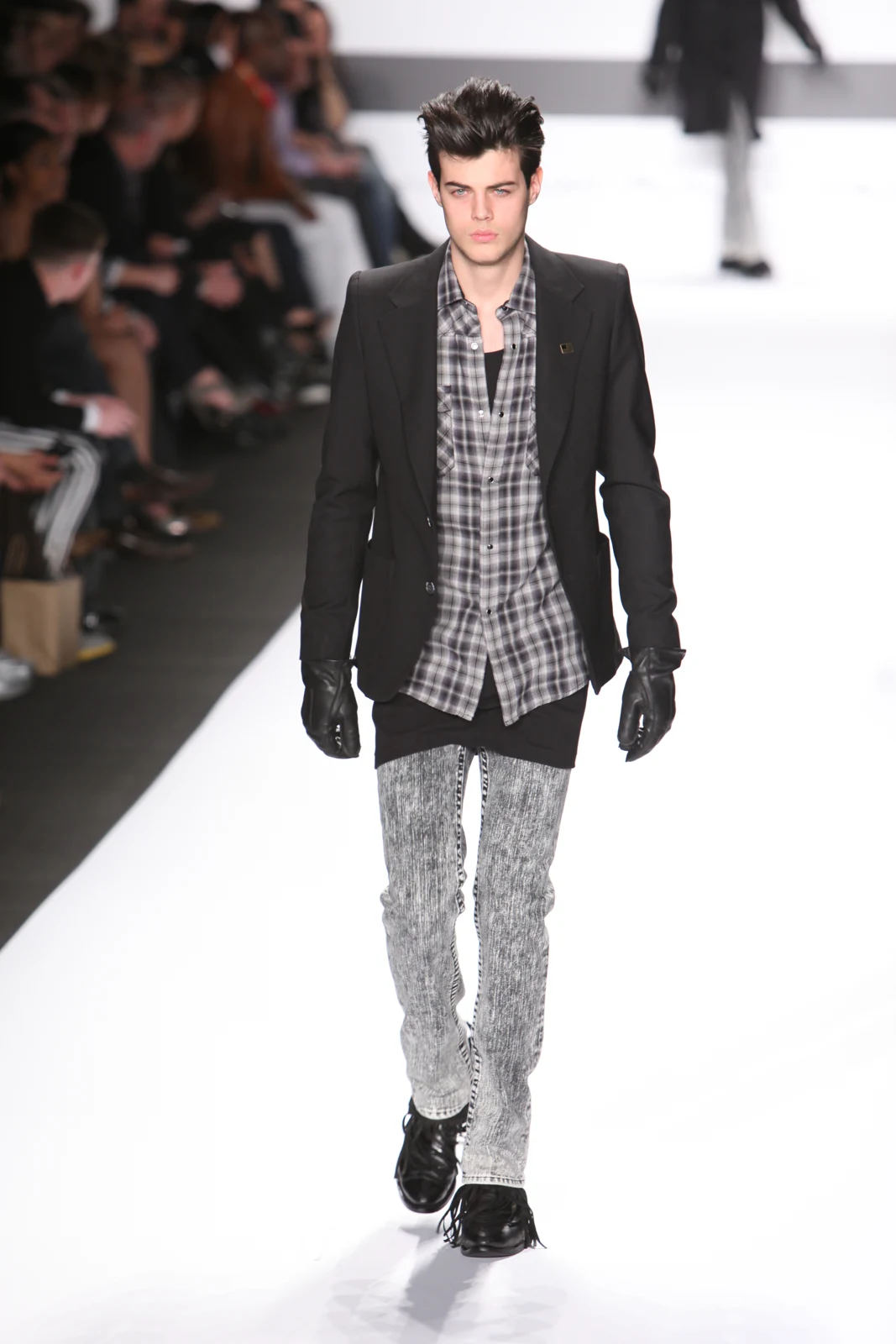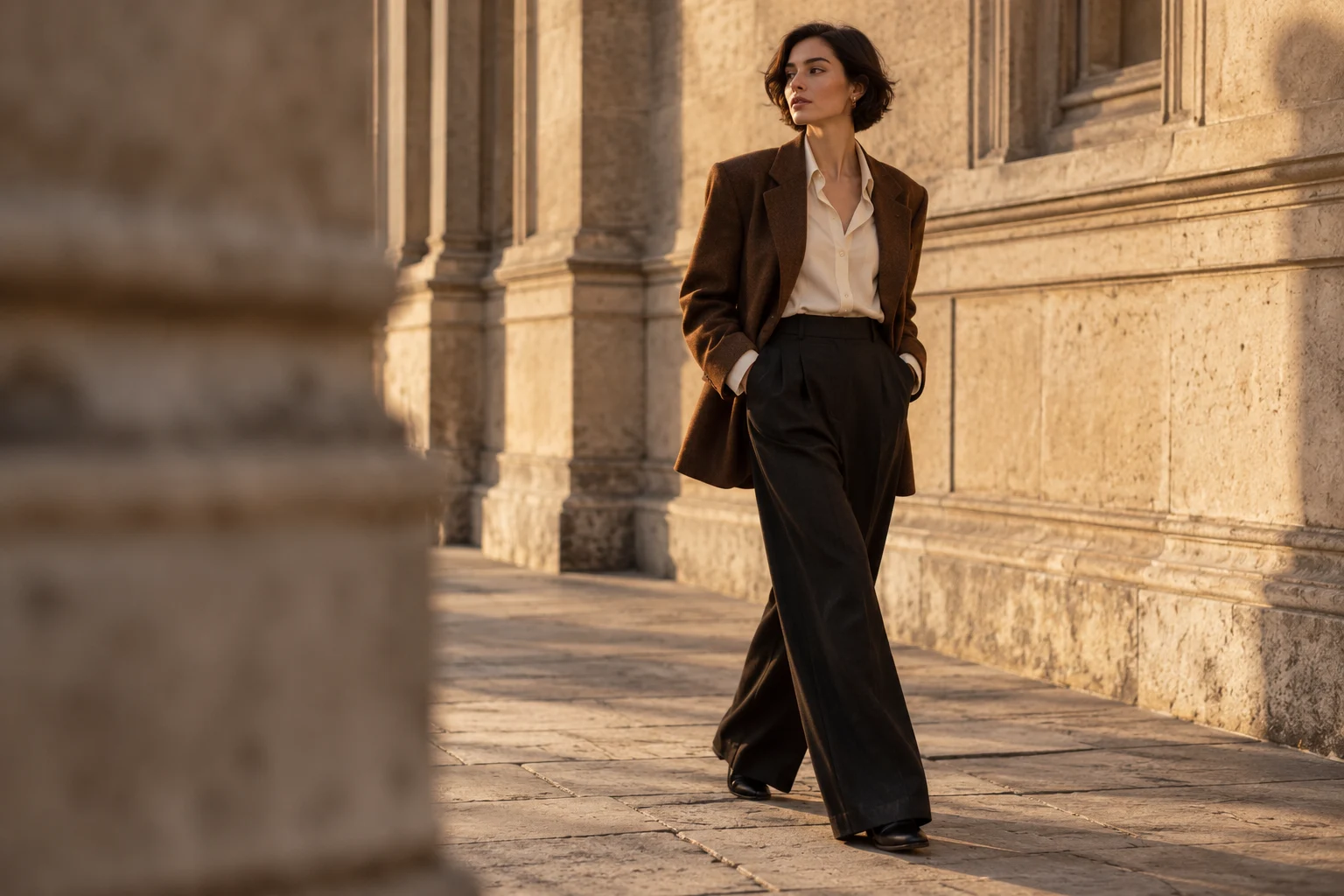
A runway look is a complete proposition: casting, hair, lighting, clothes and movement all work together. Copying only the garments may not reproduce the effect you liked. A more useful starting point is to identify one relationship inside the image and build your own version around it.
Step one: name the attraction
Be specific. “It looks chic” gives you little to work with. “The long jacket makes the short layer feel intentional” or “the small bright accent wakes up the dark outfit” describes a relationship you can test.
If you cannot isolate the attraction, compare the image with another look you like less. The difference may reveal what matters to you: volume, restraint, contrast or an element of surprise.
Step two: choose your constants
Keep the pieces you need for your actual day. That might mean shoes suitable for walking, a bag that carries your essentials or a layer for the weather. Treat these as design constraints rather than compromises.
Next, choose the one variable you will change. If you are testing colour, keep the silhouette familiar. If you are testing volume, use colours you already enjoy. Changing everything at once makes the experiment harder to understand.
Step three: wear it, then edit
Walk, sit, reach and take off the outer layer. Does the outfit still feel coherent? A look that only works while standing still may be a good photograph but an impractical daily choice.
Make one adjustment at a time. Shorten a visible edge by tucking it, swap a bulky layer for a fine one, or reduce an accent from a garment to an accessory. Photograph the revised version if that helps you compare.
Keep a useful record
Write one sentence about what worked and one about what did not. For example: “I liked the pale collar against the dark coat, but the middle layer was too thick.” That is more actionable than rating the outfit out of ten.
The best result is not resemblance to the runway. It is discovering a combination you would not otherwise have tried—and knowing enough about it to wear it again.