“Silk or satin?” sounds like a choice between two equivalent materials. It is usually a category mix-up. Silk describes the fibre. Satin describes a type of weave and, by extension, the fabric made with it. A fabric can therefore be both silk and satin.
Read the description in layers
| Term | What it tells you | What it does not settle |
|---|---|---|
| Silk | A fibre used in the cloth | Its weight, weave or degree of shine |
| Satin | A weave associated with a smooth, lustrous face | The fibre content |
| Silk satin | Both fibre and weave | The exact drape, opacity or care requirements |
| Silk blend | Silk mixed with other fibres | The proportions unless listed |
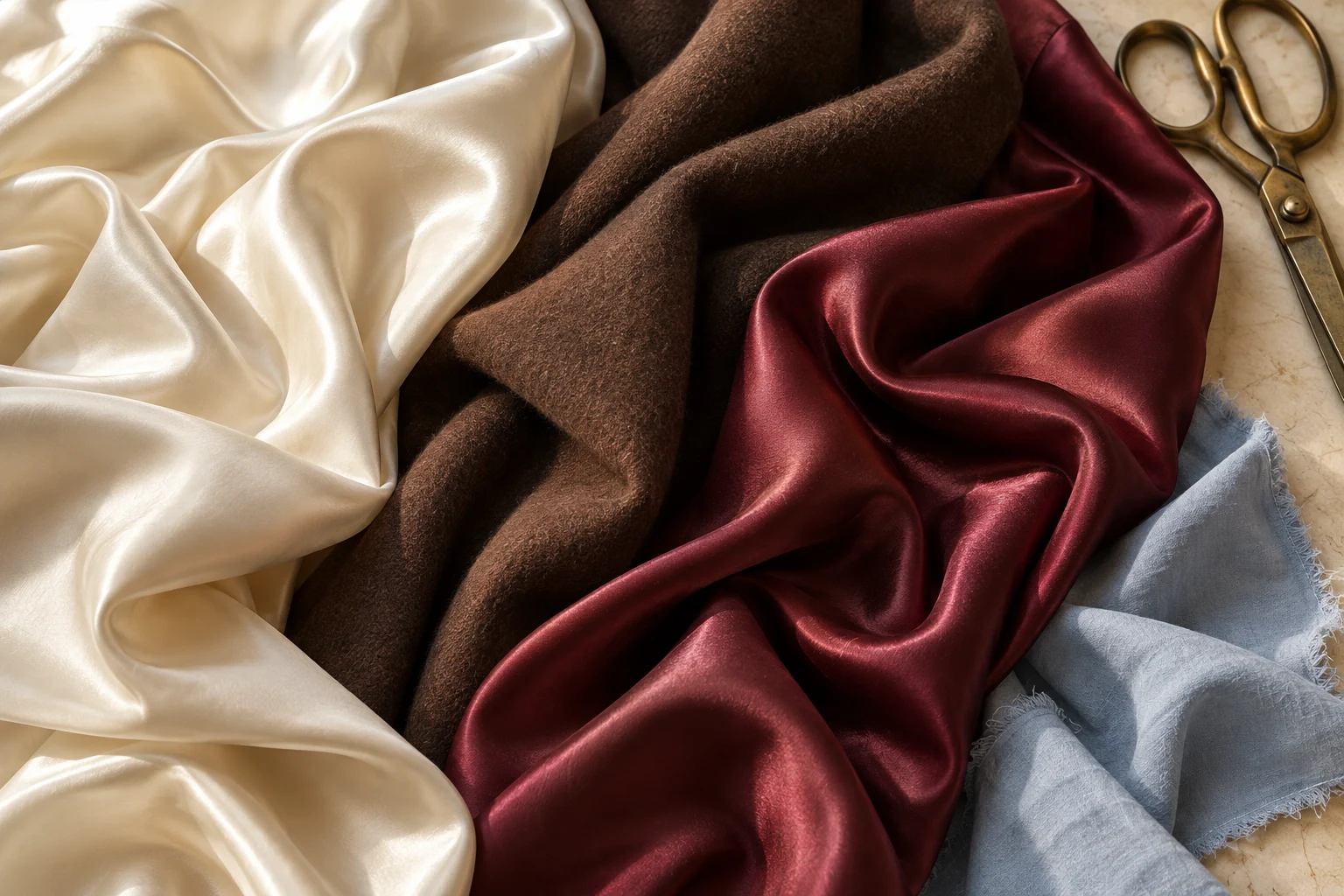
Mood’s duchesse satin range illustrates the distinction: the supplier describes satin constructions with different fibre contents. Read the individual composition, not just a collection heading or a photograph of a glossy surface.
Why two satins can behave differently
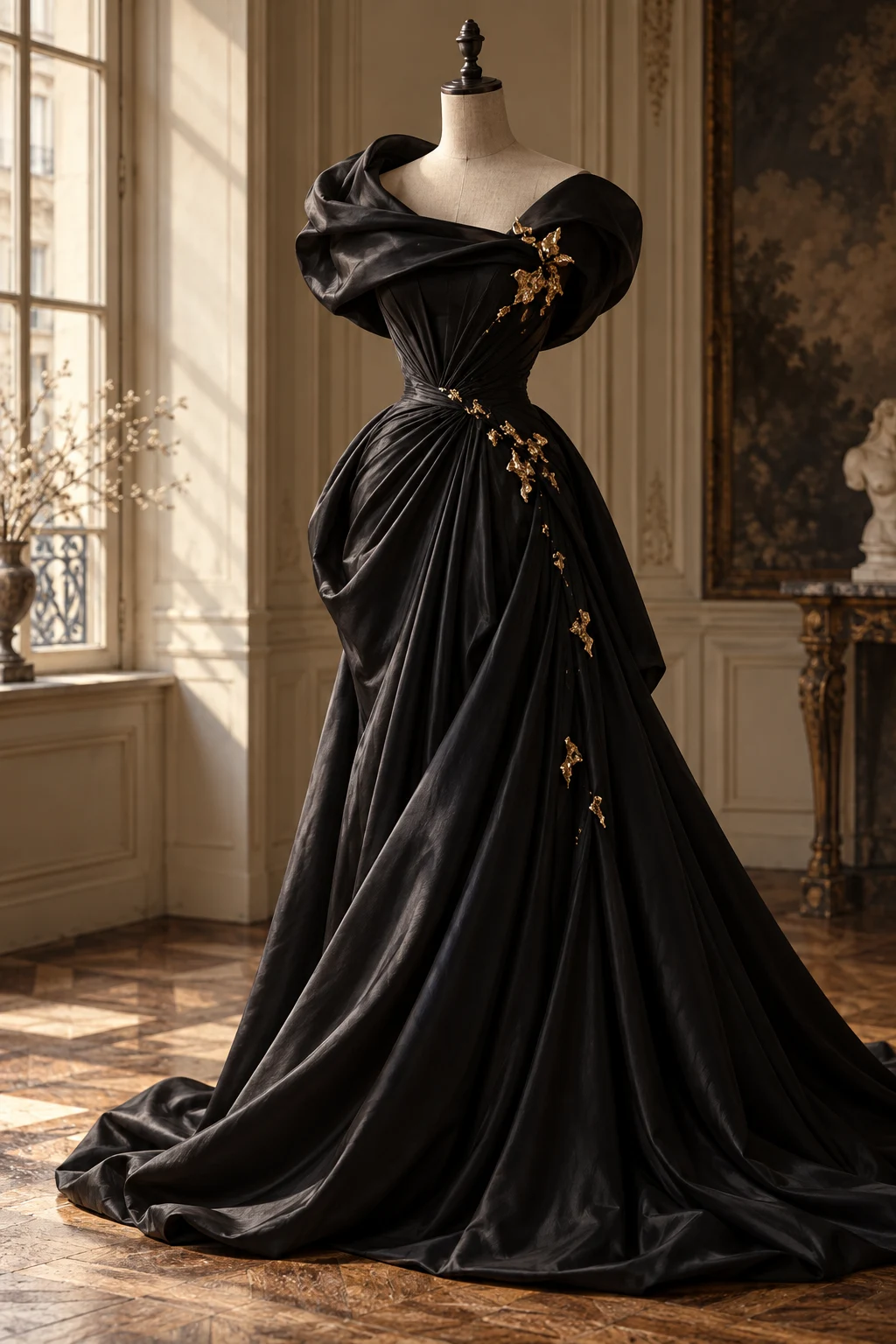
A substantial satin used for a structured skirt and a light satin used for a fluid blouse can produce very different outlines. Weight, yarn, finishing, cut and lining all matter. The word satin alone is not a promise of softness, transparency or stretch.
Likewise, not every silk garment has a shiny face. If you are trying to recreate the visual effect of an outfit, describe the behaviour you need: crisp volume, soft folds, a bright highlight or a subdued surface. That is more helpful than choosing a fibre name and assuming the rest.
A product-page checklist
- Find the full fibre composition, including any separate lining.
- Look for a weight or a clear description of drape.
- Check whether stretch comes from the construction or an added fibre.
- Use close-up and movement images if supplied.
- Read the specific care label or instructions.
A screen cannot establish how a fabric feels against your skin. If that question matters, inspect the item in person or ask for a swatch where available. This is especially useful when two similarly named fabrics need to sit together in the same outfit.
For another example of why a broad label is insufficient, compare organza and chiffon: two sheer-looking surfaces can organise a silhouette very differently.
Sources & further looking
Mood Fabrics — Duchesse satin fabrics and fibre compositionsHistorical, material and collection references are linked above. Styling exercises and interpretations are our editorial suggestions.