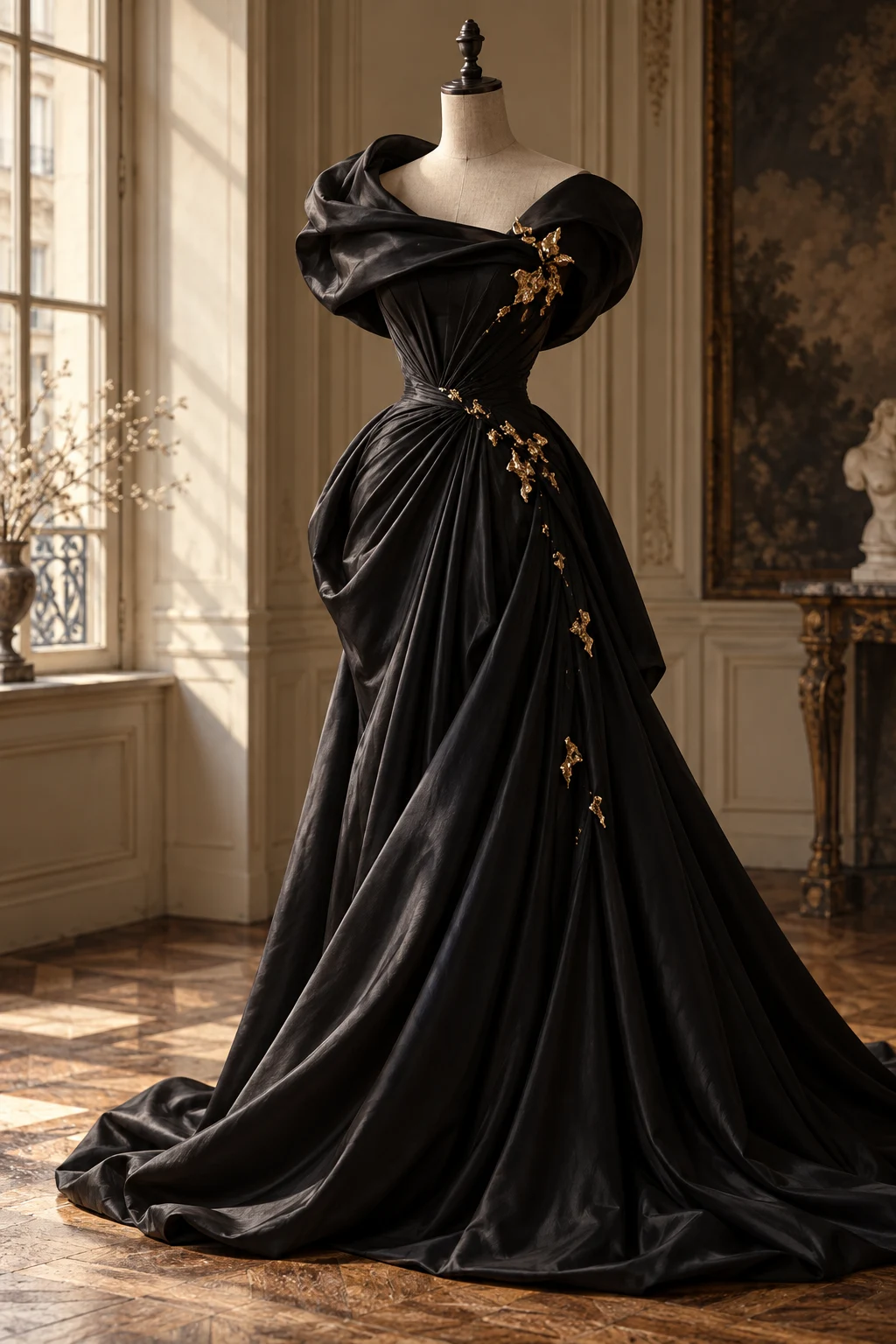
A necklace and a neckline both draw a line near the face. They can follow each other, occupy separate areas or cross with deliberate contrast. Problems often arise when the relationship keeps changing as you move and neither element settles where you want it.
Echo the shape
A curved necklace inside a curved opening can repeat the same gesture. Leave enough room between them that each remains visible. If the necklace sits directly on the edge, check whether it catches or disappears into the fabric rather than assuming the match is successful.
Leave a clear gap
A short necklace with a lower opening can separate jewellery from clothing. The empty space is part of the arrangement. It does not need to be filled by a second necklace simply because more room is available.
Create a contrast
A long pendant over a high neckline introduces a vertical line across a relatively uninterrupted surface. A more angular piece inside a soft opening can introduce a different shape. These are possibilities to compare, not rules linked to face shape or body type.
A quick movement test
- Put on the complete top, including the intended underlayer.
- Adjust the necklace to a comfortable position.
- Turn your head, sit and reach forward.
- Check whether it returns to the position you liked.
- Try one alternative length if the edge and jewellery keep competing.
Consider the fabric as well as the outline. Raised settings or rough edges can catch delicate knits and loose weaves. Do not force a piece into a combination that repeatedly snags.
When no necklace is the strongest option
A collar, bow, strong neckline or embroidered area may already provide the focal point. Leaving it uninterrupted is an active choice. Earrings or a bracelet may give you the jewellery you enjoy without adding another line in the same small area.
The useful question is not whether you have obeyed a matching system. It is whether the arrangement stays comfortable, legible and consistent with the part of the outfit you want to emphasise.