Black can be a continuous field, an outline, or a pause inside a busy pattern. These three archive photographs from Milan show different ways of putting it to work. They are individual looks, not a claim that two collections shared one intention.
01 / Openings make a drawing
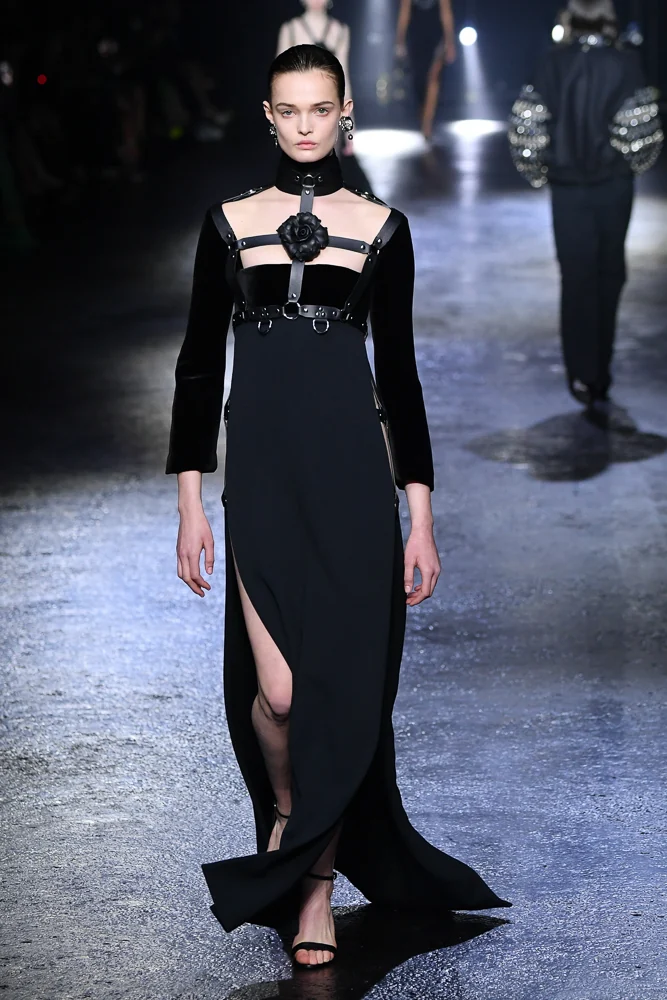
In the Roberto Cavalli Fall/Winter 2022 image above, the long black dress is interrupted around the upper chest. Straps and bright metal rings make the interruptions legible; a dark flower adds another kind of surface. The interest comes from the relationship between covered and uncovered areas as much as from the dress’s outer silhouette.
Notice how far your eye travels before returning to the central detail. This is a useful alternative to treating an all-black outfit as a single undifferentiated block.
02 / Black anchors the pattern
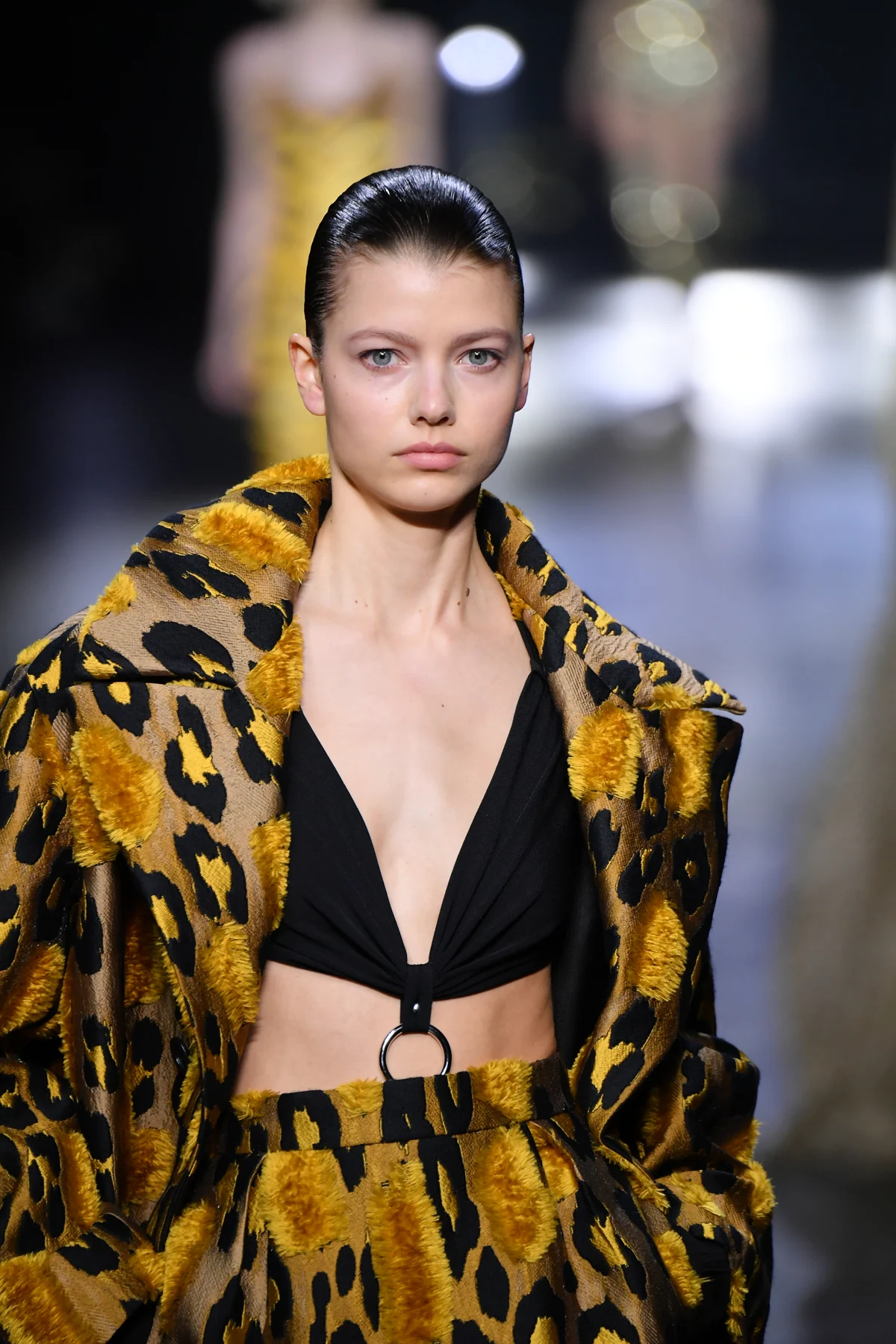
In the second Cavalli photograph, mustard, tan and dark markings spread across the outer pieces. The black centre provides a quieter area, while the gathered top and its ring fastening keep that area from disappearing. Our reading is that the unpatterned section gives the surrounding pattern something to push against.
To borrow the principle, place a strong print over a plain inner layer and compare it with a printed inner layer. The exercise is about the amount of visual interruption, not copying this particular runway outfit.
03 / Pockets divide a surface
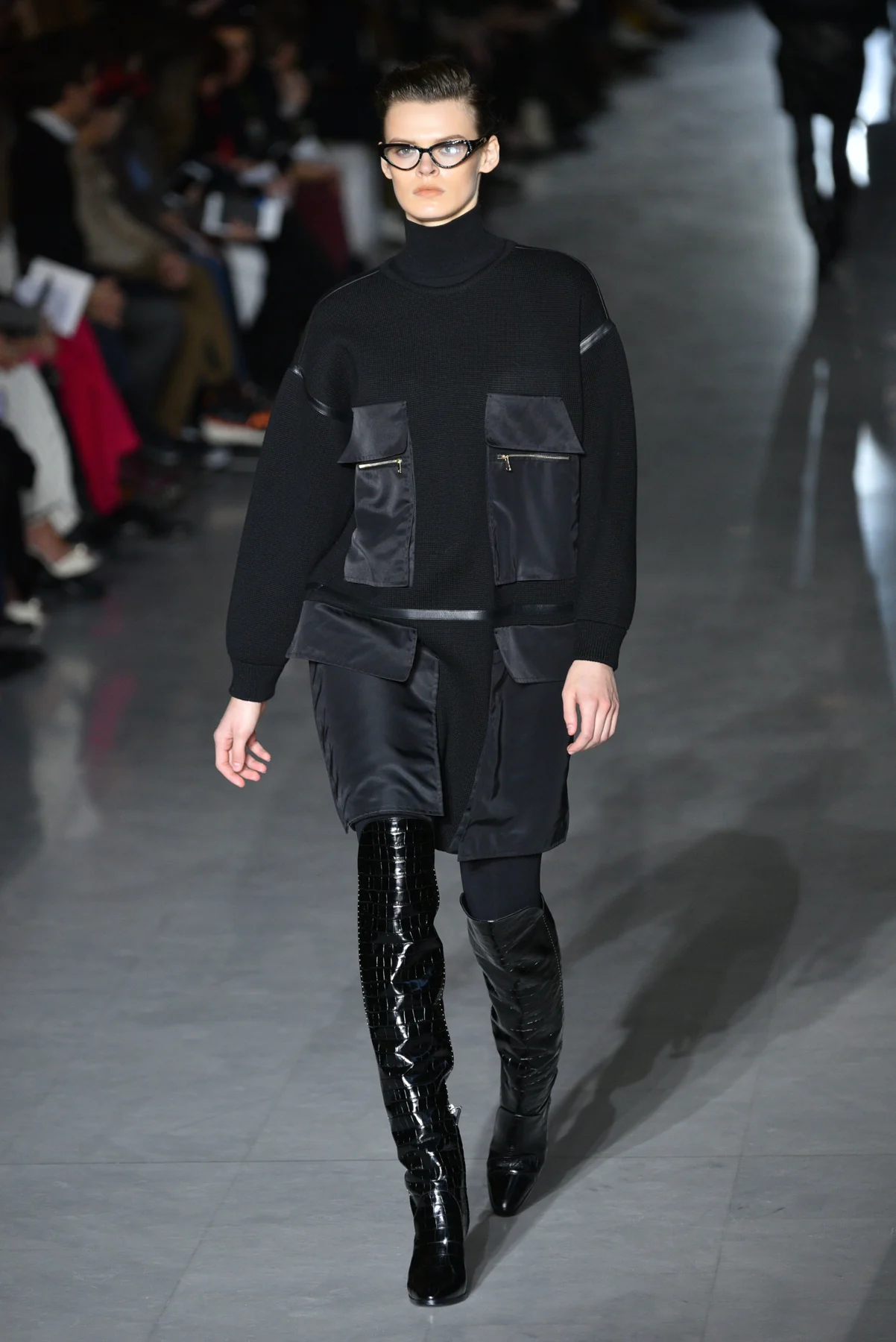
The Max Mara Fall/Winter 2019 photograph offers another solution. Large patch pockets divide the dark front into clear sections. Their smoother surfaces contrast with the surrounding texture, and the reflective boots create a separate lower block. An outfit can stay within a narrow colour range while carrying several distinct levels of shine.
What the photographs can tell us
These are observations about visible shape, colour and surface. They do not establish fibre content, comfort or the way the garments behave across a full walk. Each photograph retains its collection date and source so the archive remains useful as an archive.
Compare the three photographs side by side
Put the looks into three simple categories before judging which you prefer. In the first Cavalli image, look at the dark area interrupted by openings and hardware. In the second, look at the quieter centre framed by a busier outer pattern. In the Max Mara image, look at the way pockets and changes of surface divide a dark front. The common colour is not the whole story; each image gives the eye a different route through it.
Try covering the top half of each photograph with a sheet of paper, then the bottom half. Which detail still explains the look when you can see only part of it? This is a viewing exercise, not a claim about the designer's intention. It helps reveal whether the visual structure comes from silhouette, a surface contrast, or a small accent.
Translate one observation without copying a look
With clothes you own, put a plain dark layer beneath a patterned jacket, then try a patterned layer beneath a plain jacket. Keep the trousers and shoes the same. In the first version, the outer piece frames a quiet centre; in the second, the print occupies the centre. You can also compare a textured dark coat with a smooth one to see how much work the surface does without changing the colour.
These archive photographs show Fall/Winter 2019 and Fall/Winter 2022 looks, not the current Milan season. For recent collection reporting, visit the Milan notebook. For a method you can apply to any show image, use our three-question photograph guide.
Sources & further looking
Image record — Roberto Cavalli, Lulu Tenney, FW22Image record — Roberto Cavalli, Mathilde Henning, FW22Image record — Max Mara FW19Historical, material and collection references are linked above. Styling exercises and interpretations are our editorial suggestions.
Continue with the runway guides, or read our editorial policy.