A sweater can look smooth in the shop and develop small fuzzy balls at the underarms after a few wears. Those bobbles are pills: groups of fibres that have worked towards the surface, tangled together and remained attached to the fabric. They are evidence of abrasion, but they are not a one-step test that labels a garment “good” or “bad.”
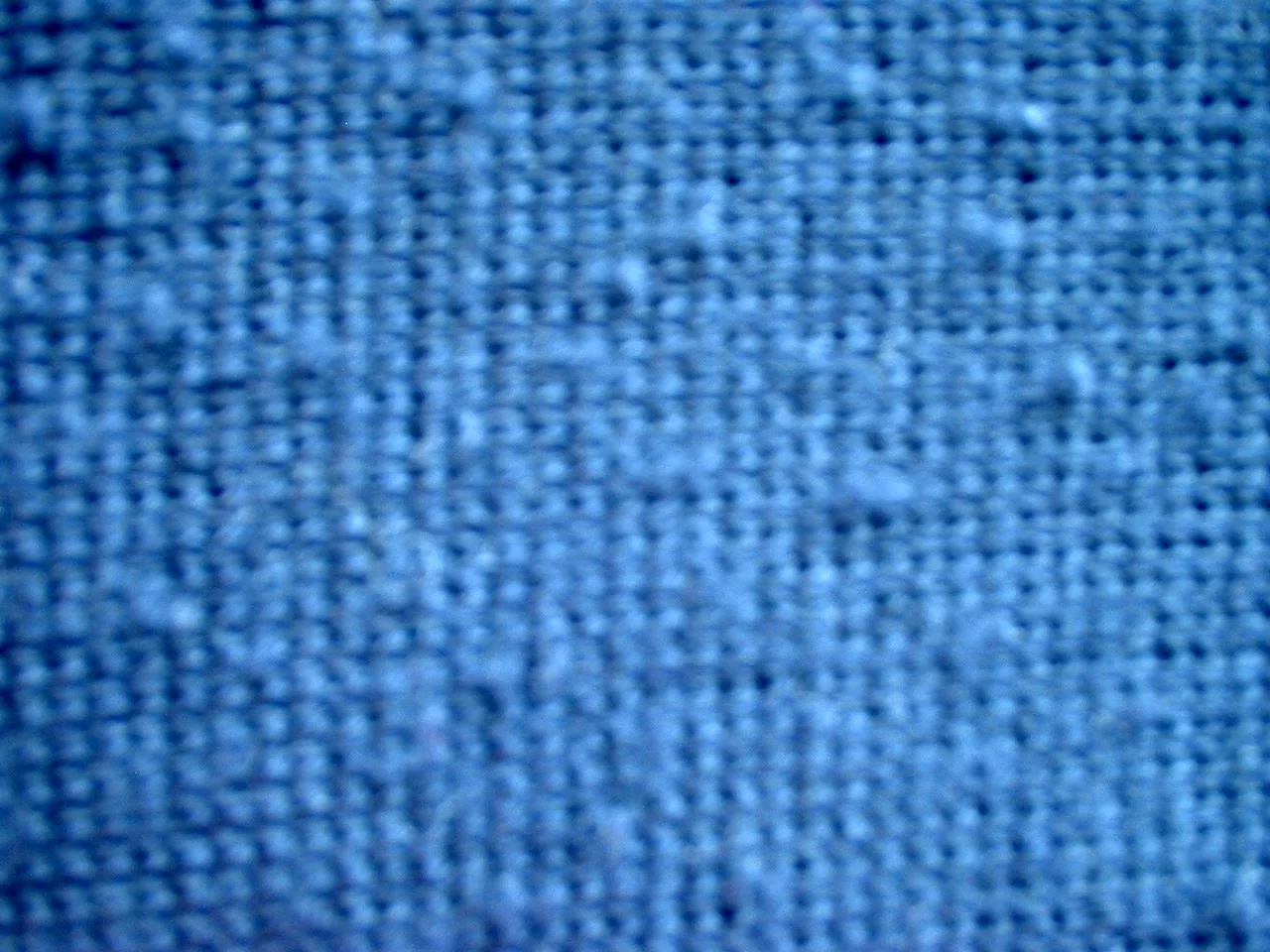
The photograph above is an illustrative close-up of pilling on blue knitwear. Its source does not identify the fibre content, maker or age of the textile. That uncertainty is useful: appearance alone can show pills, but it cannot tell us every reason they formed.
A pill begins as fuzz
Research from North Carolina State University describes pilling as a dynamic process with three competing rates: surface fuzz forms, the fuzz entangles, and pills wear away. When formation and entanglement happen faster than wear-off, bobbles accumulate.
The first stage is fibre migration. Rubbing encourages loose fibre ends to move out of the yarn and onto the fabric surface. Repeated back-and-forth motion then gathers those ends into a small ball. Some fibres remain anchored in the yarn, holding the pill to the garment until they break or are removed.
This explains why pilling is not the same as loose lint resting on a sweater. Lint may brush away. A pill is mechanically connected to the fabric, so pulling hard can tug sound fibres out with it.
Friction draws the map
Woolmark lists elbows, underarms, sleeves, the belly and the sides of a sweater as common pilling zones because those areas repeatedly rub against the body or another part of the garment. A crossbody strap, backpack, coat lining, desk edge or seat belt can add a second source of abrasion.
Before blaming the entire knit, look at the distribution. Pills concentrated beneath one arm may reflect arm movement. A diagonal band across the chest can correspond to a bag strap. An even haze over both sides may point towards laundering or broad surface friction. The pattern is evidence of contact, not a complete laboratory diagnosis.
Two people can therefore wear the same style and produce different results. Activity, layering, fit, carrying habits and washing all change the amount and location of rubbing. Woolmark’s product specification treats wear pilling as highly variable and notes that a fixed laboratory test cannot perfectly reproduce every wearer’s experience.
Fibre, yarn and knit structure all matter
Fibre length is one part of the picture. Longer staple fibres have more length held inside the yarn, leaving fewer ends available to migrate. The NCSU study notes that longer fibres generally reduce pilling tendency, while also warning that fibre length is not the only or always the dominant factor.
Yarn twist controls how firmly fibres are bound together. Woolmark advises designers to use longer fibres, higher twist and greater fabric cover when trying to reduce pilling. A loosely twisted, open, lofty knit offers a different surface from a compact yarn in a dense structure.
That is where the common idea that “soft sweaters pill more” needs precision. Softness itself is not a defect and does not identify a construction. However, a very lofty hand can be produced with shorter fibres, low twist or an open knit—features that may make migration easier. Another soft fabric could use long fibres and a well-balanced yarn. Touch cannot reveal all of those variables.
Fibre strength affects how long a pill remains. Strong anchoring fibres may hold an entangled ball on the surface instead of allowing it to break away. That is why adding a synthetic fibre does not produce one universal result: blend percentage, fibre strength, yarn design and fabric construction interact.
What pilling says about quality—and what it does not
Heavy, persistent pilling can reduce a garment’s useful appearance, so it is reasonable to consider it a performance problem. But a few pills after early wear do not prove that the fibre is fake, the price was unjustified or the whole sweater will fail. Nor does a perfectly smooth surface prove superior fibre content.
A better assessment combines several observations. Check the care label and fibre percentages. Look at how densely the knit is formed and whether the surface is already very fuzzy before wear. After wearing, note where pills appear, how quickly they return after careful removal and whether the underlying fabric is thinning or developing pulled loops.
Judge repairability too. A stable knit with removable surface pills may remain useful for years. A loose structure that continues shedding fibres, distorting and thinning presents a different problem. Pilling is one performance signal alongside shape recovery, seam stability, colourfastness and comfort.
How to reduce pilling without damaging the knit
- Follow the garment label. Fibre blends and finishes differ. A generic wool routine should not override the maker’s instructions.
- Reduce avoidable abrasion. Rotate where a bag sits, check rough hook-and-loop fasteners, and avoid washing knitwear beside hard zips or abrasive items.
- Turn wool garments inside out for washing. Woolmark recommends this so laundering friction affects the inside more than the visible face.
- Use fabric softener cautiously. Woolmark advises avoiding it for wool because excessive conditioner can help fibres migrate out of an already soft yarn structure.
- Remove pills on a flat, dry garment. Work slowly with fingers, a suitable comb or a fabric shaver. Keep the fabric supported, avoid pressing blades into the knit and stop near loose loops, embroidery or raised texture.
Do not yank a pill attached by long strands. Cut or shave only the surface tangle with a tool appropriate to the fabric; never treat a pulled yarn as if it were a pill. If the knit is valuable, unusually delicate or already thinning, professional repair advice is safer than repeated aggressive shaving.
For more ways to connect fibre, construction and wear, continue through Runway Note’s fit and fabrics reading route.
Read the bobbles as evidence
The useful question is not simply “Does this sweater pill?” Almost any fibre can pill under the right conditions. Ask where the pills form, how firmly they remain, what the yarn and knit look like beneath them, and whether changing friction or care alters the pattern.
That turns an annoying surface change into practical information. A pill records fibres moving, meeting and tangling under repeated contact. It can reveal how a garment interacts with your coat, bag, desk and washing routine—without pretending that one bobble can grade the entire sweater.
Sources & further looking
Woolmark — What is pilling?North Carolina State University — Hydroentanglement Process as a Finishing Treatment for the Enhancement of Knitted FabricsInternational Wool Textile Organisation — Wool Notes 2020Woolmark — Knitted apparel product specification and pilling propensityHistorical, material and collection references are linked above. Styling exercises and interpretations are our editorial suggestions.
Continue with the style notes guides, or read our editorial policy.