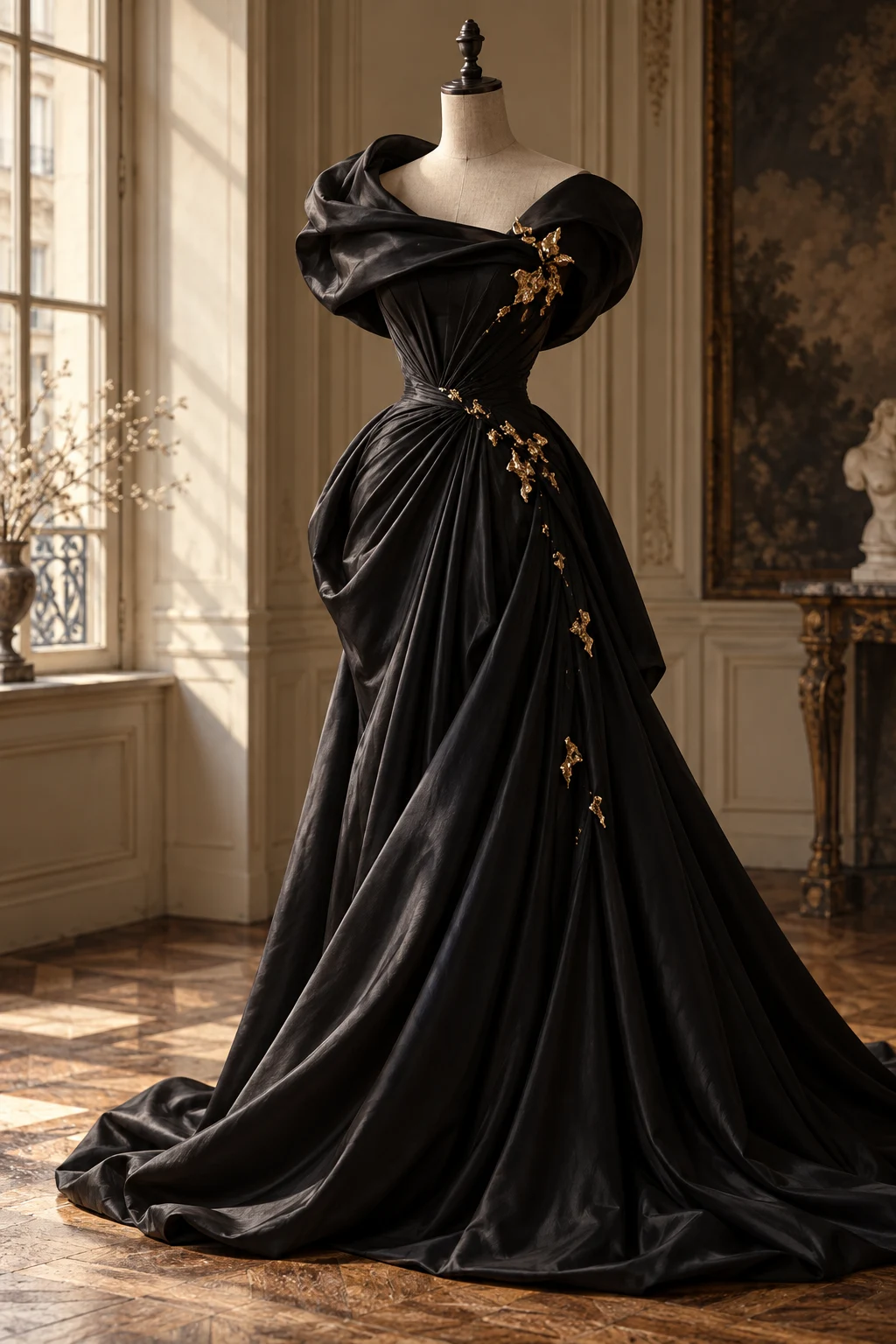
An outfit can surprise without changing every part of itself. Sometimes one element carries the disruption: an object appears in the wrong place, a flat image pretends to be three-dimensional, or an accessory suggests something it is not.
The historical starting point
The V&A describes Elsa Schiaparelli’s work through humour, unexpected materials and Surrealist imagery within a language that could still use traditional tailoring. Its collection includes an early knit with a trompe-l’œil bow and collaborations with Salvador Dalí and Jean Cocteau. This gives a more specific starting point than calling any eccentric garment “surreal”.
Why the familiar part matters
Surprise needs an expectation to interrupt. Imagine a conventional coat with one conspicuous fastening in an unexpected shape. The coat provides a recognisable framework; the fastening asks for a second look. If every surface, proportion and accessory competes for the same attention, that particular joke may become harder to read.
This is our interpretation of how such effects can work, not a rule attributed to Schiaparelli. Different designs use surprise with very different degrees of intensity.
Three ways to look more precisely
- Substitution: is one familiar object taking the place of another?
- Illusion: does an image imitate a material, depth or construction that is not actually there?
- Displacement: does an element appear in a position where you would not expect it?
More than one can be present at once. Naming the mechanism helps distinguish a visual idea from a broad adjective such as quirky.
Try restraint around the unusual piece
If you own a playful brooch, an unconventional bag or a printed top with a visual joke, wear it with a relatively calm base first. Then add a second expressive piece and decide whether the conversation becomes richer or less clear. Neither result is automatically wrong; the aim is to understand which part you want someone to notice.
An unusual accessory does not need an invented art-historical explanation to be enjoyable. Keep your personal styling experiment separate from a designer attribution. For the current house’s very different moment, see our Daniel Roseberry couture study.
Sources & further looking
V&A — Elsa Schiaparelli collection introductionHistorical, material and collection references are linked above. Styling exercises and interpretations are our editorial suggestions.