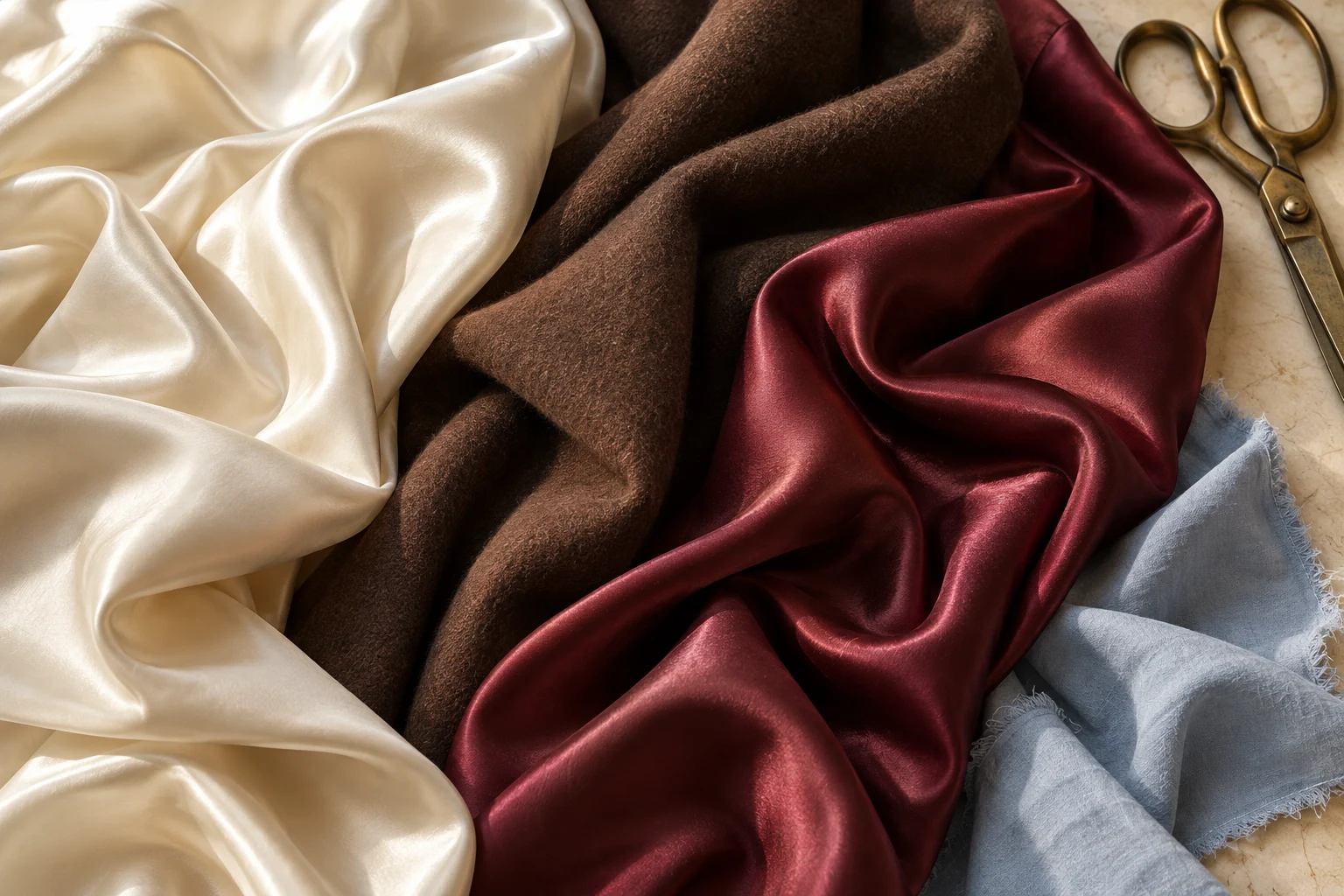
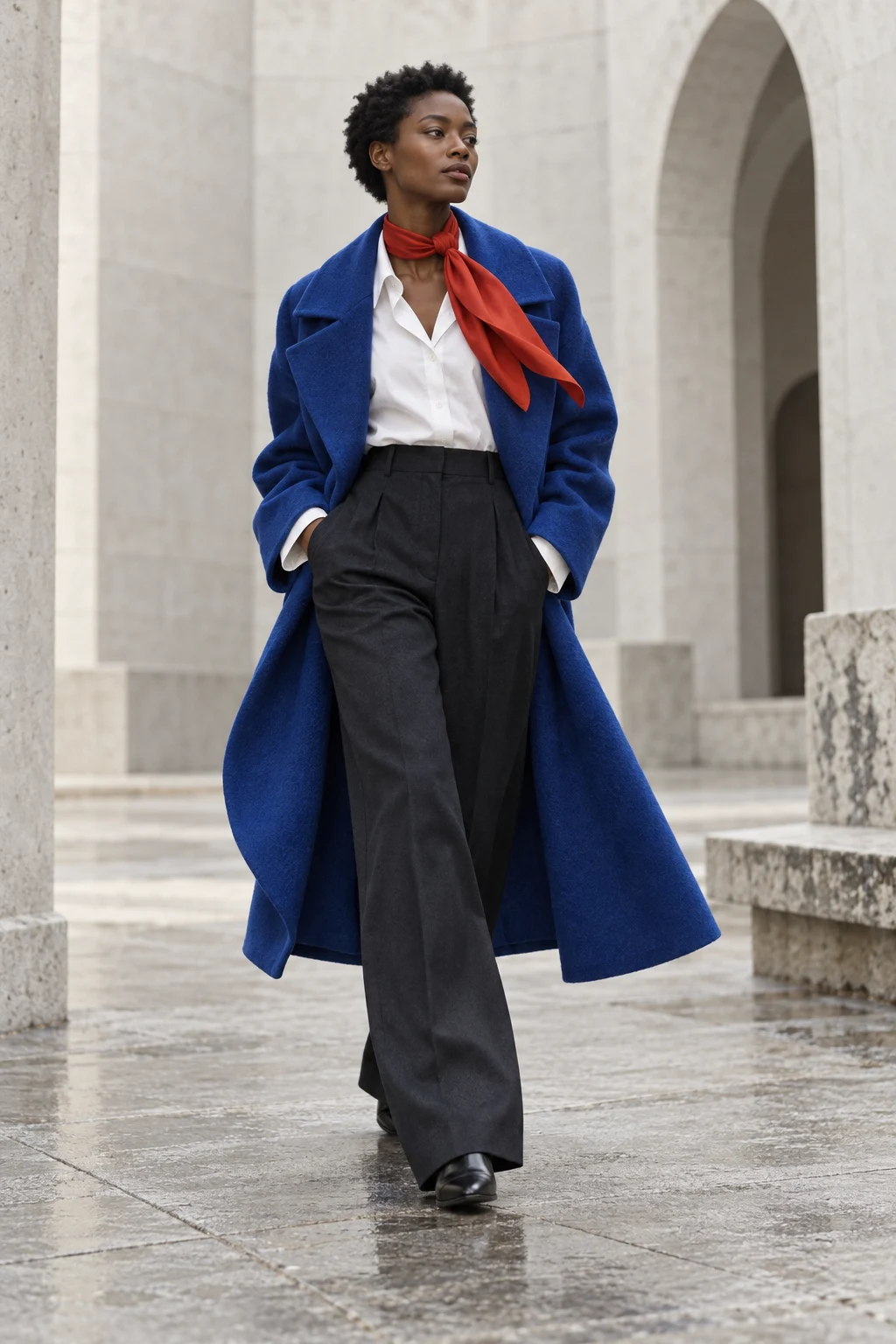
Navy and brown can feel restrained without looking like a matched set. The difficulty is that very dark versions may merge into one indistinct area. If the combination feels unresolved, change the visible difference before deciding the colours do not belong together.
Study one: clear separation
Imagine navy trousers, a medium-brown jacket and an ivory shirt. The jacket is visibly lighter than the trousers, while the shirt separates the darker areas around the neckline. This is a proposed outfit, not a report of a runway look.
Keep the shoes close to one of the existing dark colours if you want the upper layers to hold attention. Adding another strong accent can work, but first see whether the original relationship is already enough.
Study two: similar depth, different surfaces
Try a deep navy knit beside smooth chocolate-brown trousers. Even where the colours are close in darkness, the different surfaces may remain distinct. Check in daylight and in the indoor light where you will actually wear the outfit. A pairing that is clear beside a window can read differently under a warm lamp.
Study three: brown as a small interruption
Start with a predominantly navy outfit and introduce a brown bag or belt. The smaller area makes this an easier experiment if you are unsure about two large blocks. Do not feel obliged to match every leather accessory exactly; repetition is one option, not a requirement.
If the result looks accidental
- Move one colour noticeably lighter.
- Swap a surface: textured knit for smooth shirt, or matte for a little shine.
- Introduce a small area of ivory or pale blue to make the dark colours easier to distinguish.
- Remove a third colour that is competing with the pair.
The swatches here are editorial approximations. Fabric finish and lighting will change what the same colour names mean in practice. Begin with the clothes in front of you, then use the name of the palette to organise your thinking.
For a lighter contrast around brown, try chocolate and ice blue.