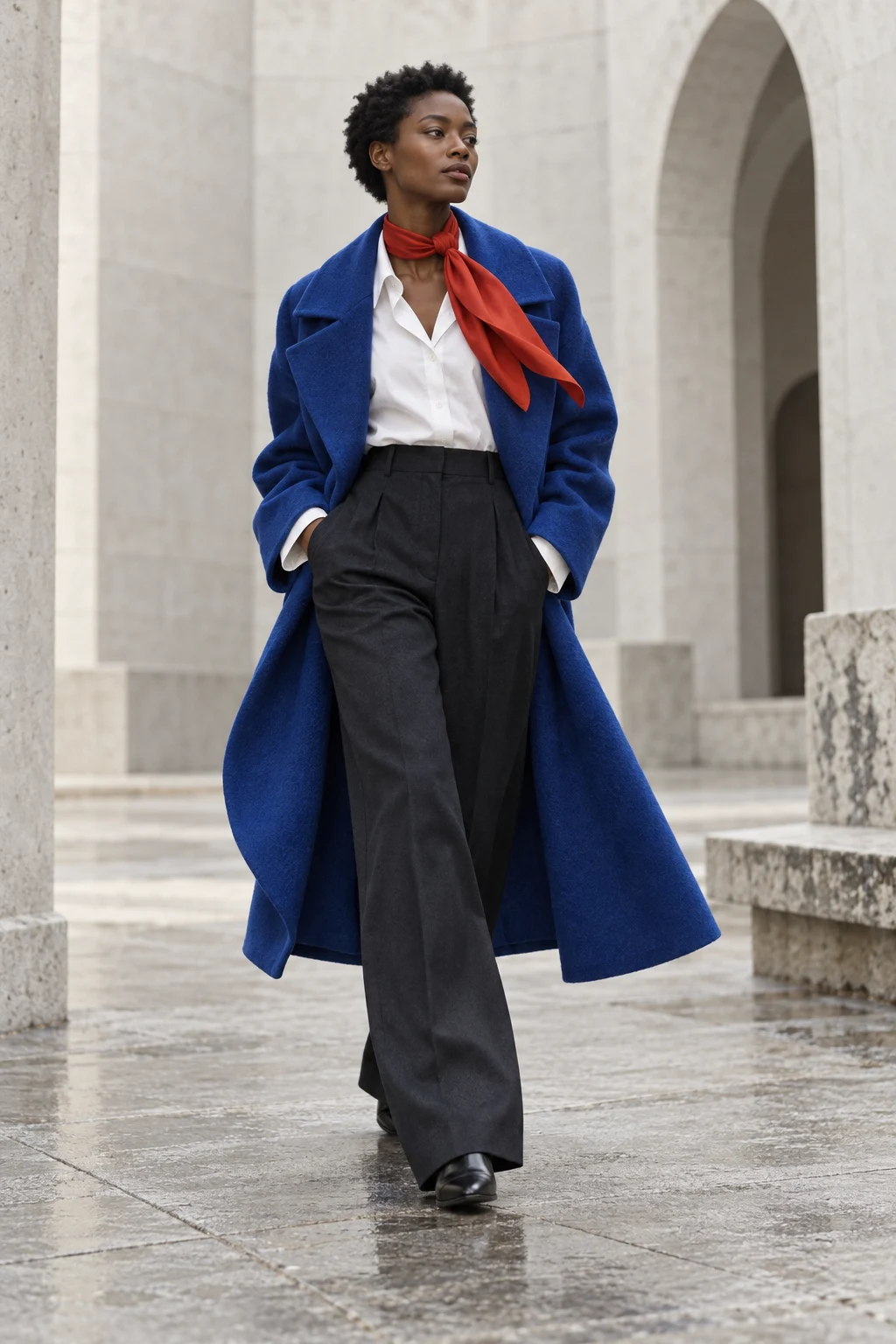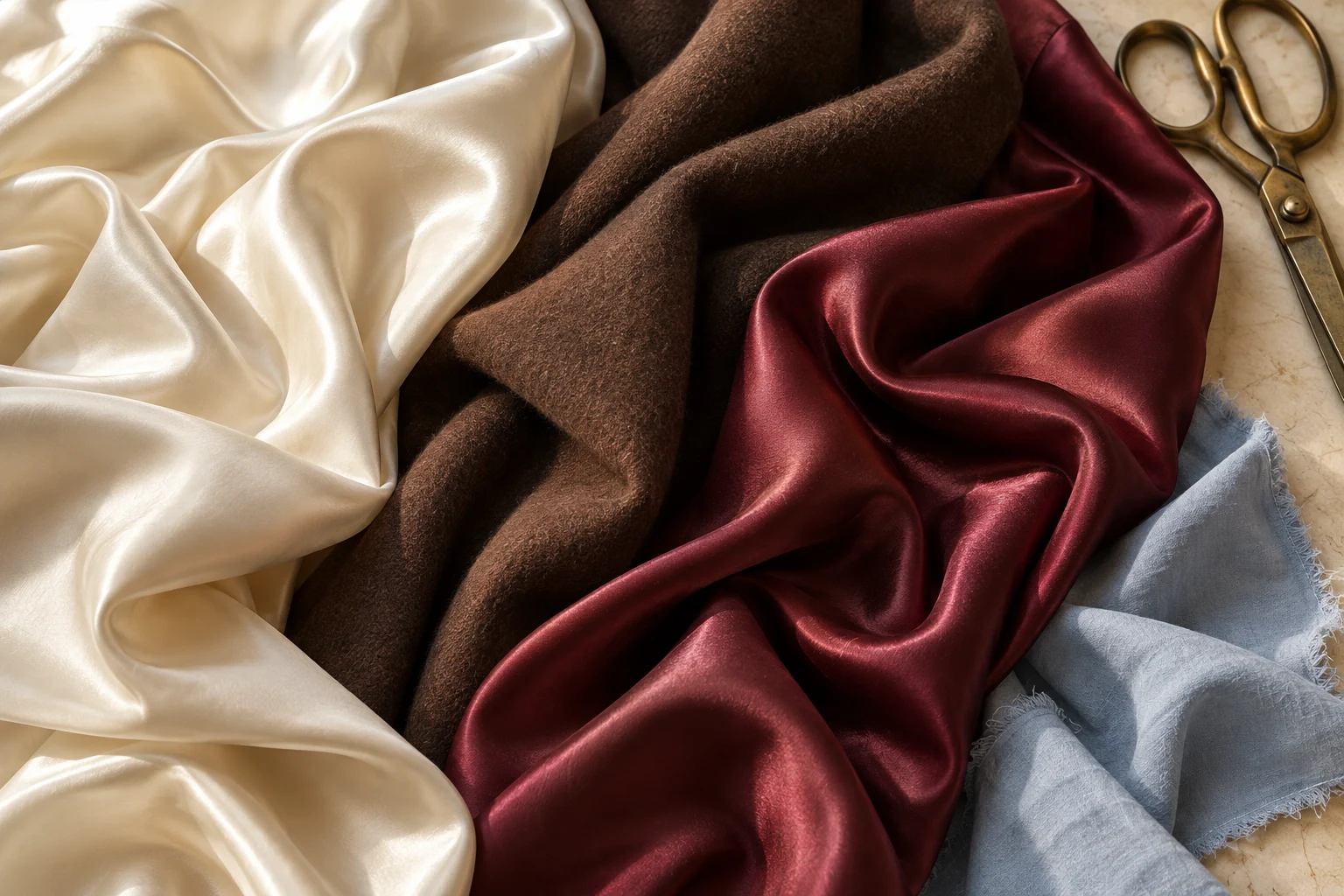
This is an editorial palette proposal rather than a claim about a single designer’s runway. Brown and pale blue create a useful difference in both temperature and depth: one anchors the outfit while the other opens it up.
Start with the brown
Choose one substantial brown piece—a jacket, trousers or a skirt—and put it beside the blue you have. Chocolate, tobacco and reddish brown will each produce a different relationship. Do not assume that a combination which worked with one brown will look identical with another.
A pale-blue shirt is an easy starting point because the collar, cuffs and placket can remain visible under a darker layer. You can adjust how much blue appears without changing the garments themselves.
Make texture part of the pairing
Try a crisp blue cotton against a soft brown knit. Then compare it with a lustrous blue fabric against a structured brown jacket. The colours stay in a similar family, but the outfit’s mood changes. Decide whether you want the contrast to come primarily from colour or surface.
A small matrix
| Starting piece | Blue addition | Effect to explore |
|---|---|---|
| Brown tailoring | Pale-blue shirt | A clear line at the neckline |
| Brown knit | Blue scarf | Softness with a cool accent |
| Brown skirt | Blue fine knit | Two broad, calm areas of colour |
Finish with the shoes you would normally wear and assess the whole outfit. You may not need another colour. If the result feels heavy, introduce a small area of ivory; if it feels too delicate, a darker shoe can give the lower half more definition.
The point is not to make brown behave like black. Its warmth is the interesting part of the experiment.