What is the difference between haute couture and ready-to-wear? The shortest useful answer concerns how a garment is made for its wearer. The Metropolitan Museum of Art describes the traditional distinction as custom-made versus ready-made: couture models are fitted for a particular person, while ready-to-wear designs are produced in multiples and standard sizes. That distinction is a starting point, not a test you can perform by looking at a runway photograph. The two systems exchange techniques and ideas, and expensive clothing is not automatically couture.
At a glance: two different fashion systems
| Question | Haute couture | Ready-to-wear |
|---|---|---|
| How is a garment made for the wearer? | A model can be adapted and fitted for an individual client. | Designs are produced in a range of standard sizes. |
| What does a runway show represent? | A presentation of an atelier’s design and making practice; the shown model is not necessarily the final client garment. | A seasonal collection designed for a broader production and retail system. |
| Can the silhouette be dramatic? | Yes, but spectacle is not a definition. | Yes; an elaborate runway look can still be ready-to-wear. |
| How should the collection be labelled? | Check the house’s description and the Haute Couture Week calendar. | Check the house’s description and the relevant womenswear or menswear calendar. |
The table describes the broad distinction, not every garment in either category. The Met’s Manus x Machina exhibition deliberately examined how hand and machine methods overlap rather than treating one as pure craft and the other as pure industry.
Why “haute couture” is more specific than “high fashion”
“High fashion” can describe many things: influential design, an expensive label, a striking editorial image. Haute couture has a particular Parisian institutional history. The Fédération de la Haute Couture et de la Mode (FHCM) traces the legally controlled French designation to a 1945 decision. It coordinates Haute Couture Week and publishes an official calendar. Its current description distinguishes members of the Chambre Syndicale de la Haute Couture, corresponding members and guest houses selected by the committee. Appearance alone does not establish a house’s calendar category or designation.
That distinction also prevents a common error in fashion articles: calling every embellished gown “couture.” A red-carpet dress may be custom, part of a ready-to-wear collection, a house’s couture work, or something else. The safe description is the one supported by the house or an authoritative collection record.
How the calendars help you read a show
FHCM says Haute Couture Week takes place twice a year, with spring/summer shown in January and fall/winter in July. Paris Fashion Week has separate womenswear and menswear calendars. A house may participate in more than one system, and a designer’s name can appear across different collections. When you see “Spring/Summer 2027” in a caption, that names the collection season; the actual show may have taken place in an earlier year. Check both dates before comparing looks.
The calendar tells you how the event was presented, but it does not disclose every material, technique or person involved. For those details, look for a house’s collection notes, an atelier interview, a museum object record or a conservation study. A photograph can show an outline, seam placement or surface effect; it cannot prove how many hours of labour produced them.
Handwork, fit and the finished shape
Historically, couture has been associated with specialised fitting and intricate handwork. The Met’s account of nineteenth-century fashion describes elevated creative and technical standards alongside the rise of ready-made clothing. Yet the museum’s later Manus x Machina exhibition makes an important correction to an oversimplified story: sophisticated handwork can appear in ready-to-wear, and machinery can help realise couture. The useful question is not “Was a machine used?” but “What design problem is this technique solving?”
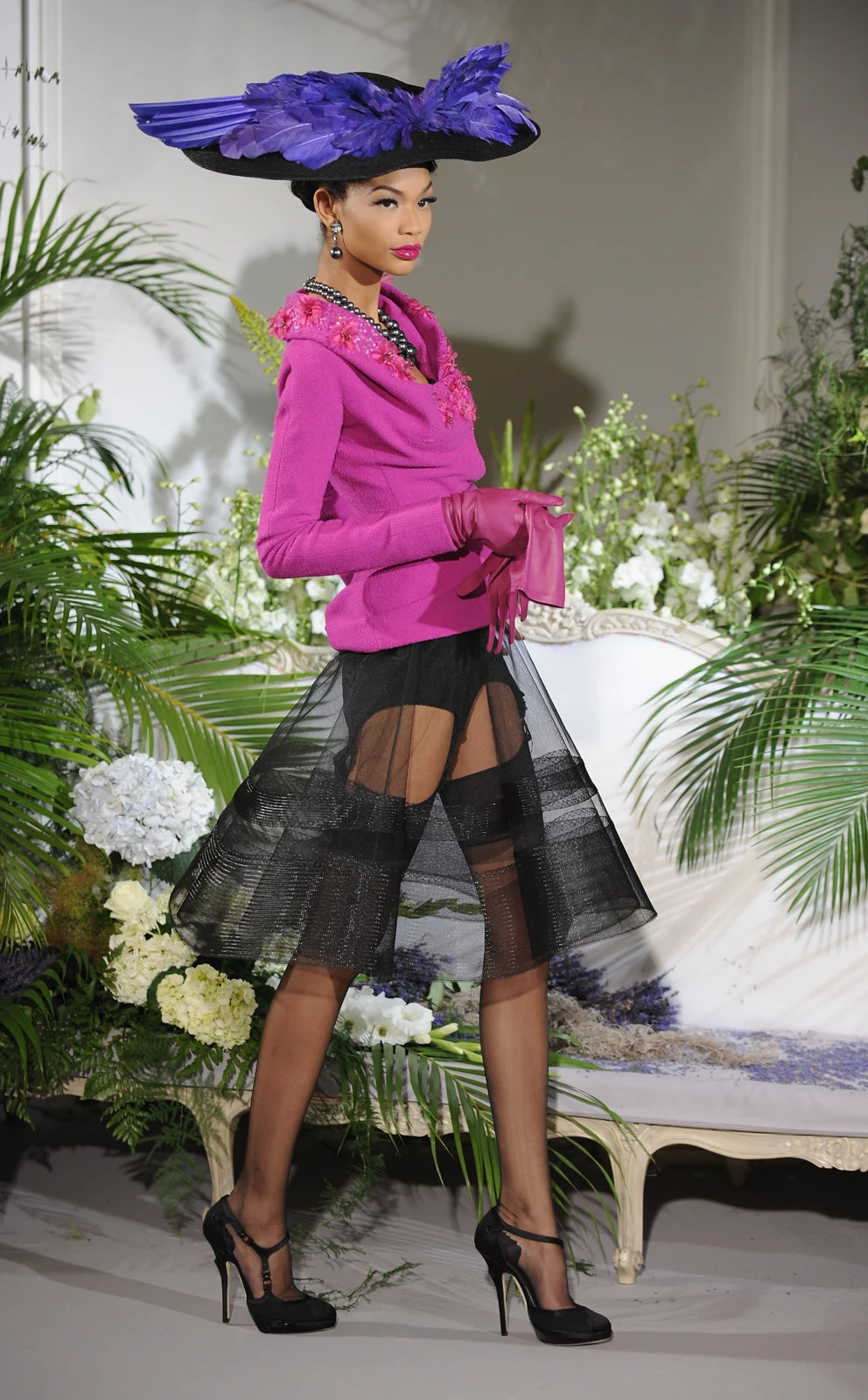
Start with the silhouette. Where does the garment hold away from the body, and where does it follow it? Look for the line of a shoulder, the position of a waist seam, the way a skirt begins to widen and the point where a hem meets a shoe. Then move closer to texture and decoration. A restrained garment may reveal as much construction thinking as one covered in embroidery.
A three-pass way to study a runway image
- Observe. Describe only what the photograph shows: proportion, visible fabric behaviour, closure, surface and movement.
- Verify. Find the collection name, show date and category on the house or official calendar, then check any stated material or technique against a named source.
- Interpret. Explain what the design communicates to you, clearly separating that opinion from the documented facts.
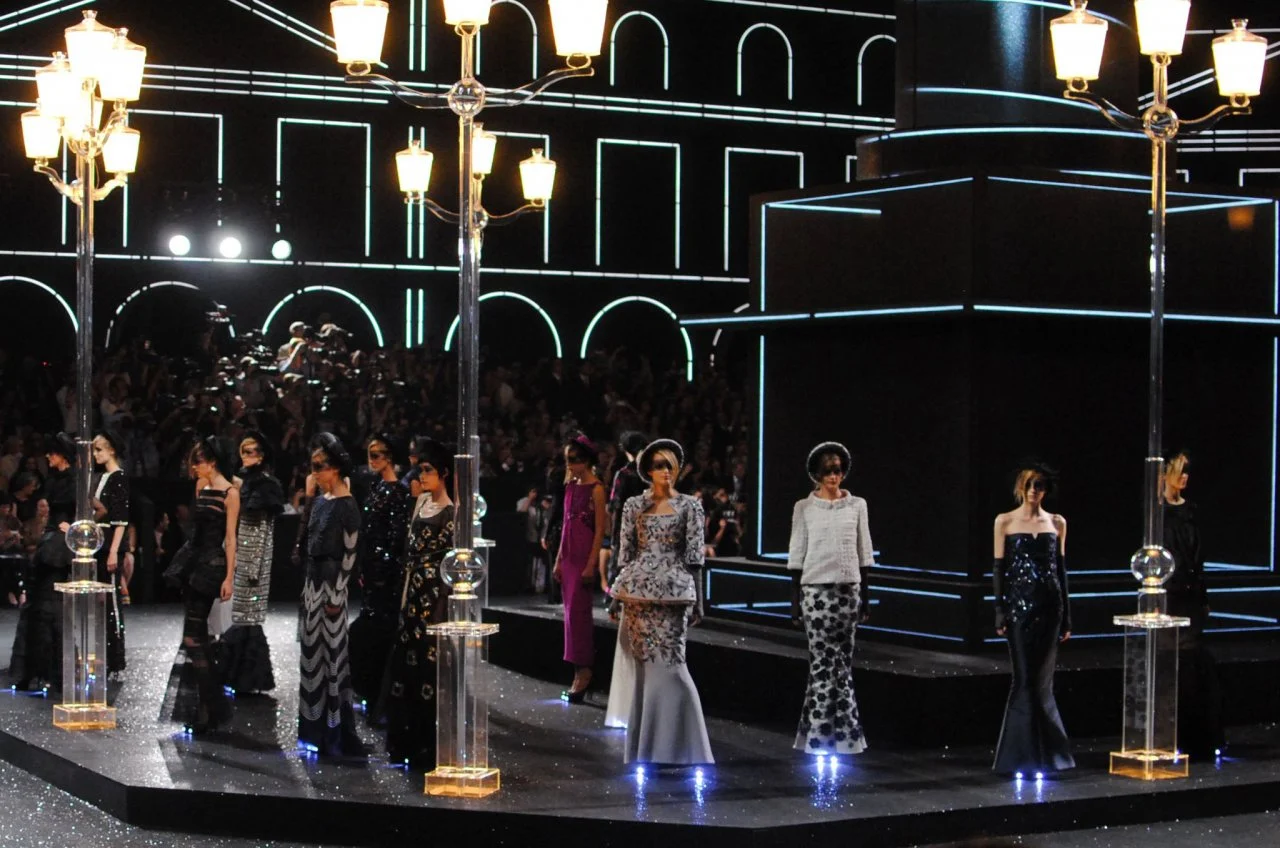
Our archival photograph above records a Chanel couture look from 2011. It is an example of a dated couture image, not evidence of what the house presented this season. The distinction matters when an older picture appears beside a current discussion.
What should a reader take from couture?
You do not need to purchase, attend a show or know an atelier to learn from a collection. One useful observation might be the proportion of a jacket to a skirt, the contrast between a structured outer layer and a fluid dress, or the way a colour is repeated in small areas. Try one idea with garments you already own, then decide whether it works in daily life. That is an editorial exercise, not a claim that your outfit reproduces a couture piece.
Continue through our couture reading route, compare Dior’s botanical references with Schiaparelli’s expressive details, or use the outfit planner to turn one observed detail into a wearable experiment.
Sources & further looking
Fédération de la Haute Couture et de la Mode — Official events and calendar categoriesFédération de la Haute Couture et de la Mode — History of the Haute Couture designationThe Metropolitan Museum of Art — Manus x Machina: couture and ready-to-wearThe Metropolitan Museum of Art — Masterworks: the development of coutureHistorical, material and collection references are linked above. Styling exercises and interpretations are our editorial suggestions.
Continue with the couture guides, or read our editorial policy.