A cluster of silver chains ending in scissors, a notebook and a thimble can look like an elaborate necklace laid flat. A chatelaine was designed to hang instead: its hook or clip fastened at the waist, keeping selected objects close to hand while turning them into part of a dressed silhouette.
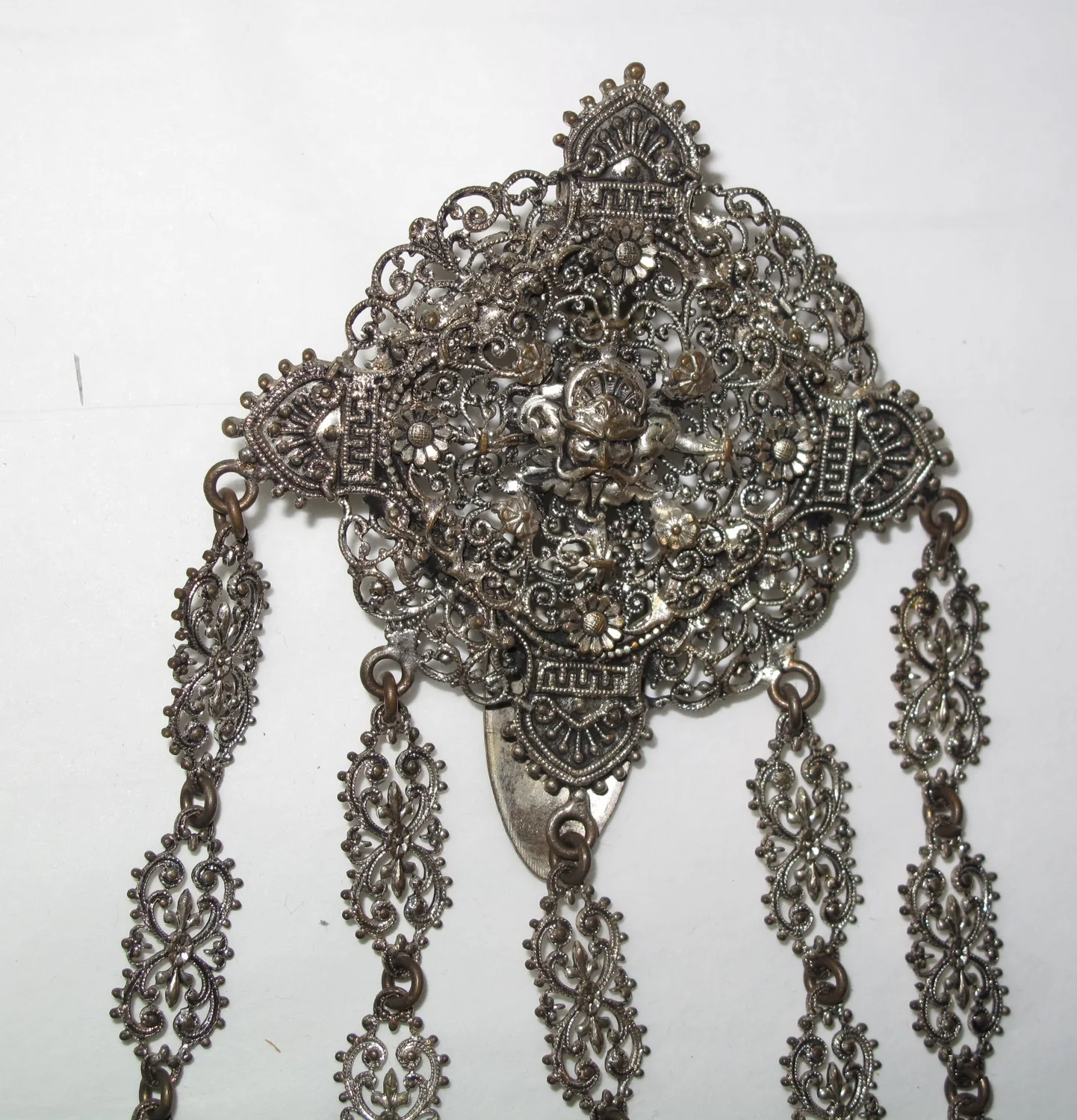
The photograph above shows a 19th-century Indian silver chatelaine in Auckland Museum. Its five chains carry holders for scissors, a thimble, needles, a pencil and an ivory notebook. It is an archival object photograph, not an image of the accessory being worn, but the hook and descending chains make the carrying system legible.
The clip was the organising idea
The Metropolitan Museum of Art traces the term to the French for the lady or mistress of a castle. It describes earlier 16th- and 17th-century forms as chains carrying objects such as keys and a cross. By the 19th century, a common arrangement used a decorated central clip with a hook at the back, attached to a waistband or belt, with several chains suspended below.
That structure matters more than any single list of contents. The wearer could distribute small objects across separate chains instead of placing everything inside one pouch. The objects remained visible and individually reachable. A late-19th-century French example at the Met combines a wax holder for sealing letters, a pencil, a notebook and chain-mail purses; the Auckland example groups needlework and writing tools.
There was therefore no universal chatelaine kit. The Canadian Museum of History records examples with thimbles, whistles, scissors, buttonhooks and pouches, and notes that specialised versions could reflect a wearer’s work. Its teaching collection includes a chatelaine used by a nurse. Function was selected, not merely added as a decorative pretext.
Utility was designed to be seen
A chatelaine did not hide its hardware. Chains created vertical lines from the waist, and every suspended case or implement contributed a different shape. The movement and sound of those parts would have made the accessory unlike a smooth brooch or a closed bag.
Decoration could be technically ambitious. The V&A describes a cut-steel chatelaine made around 1790 in Woodstock, Oxfordshire, where faceted steel studs were shaped to catch the light. Each stud was threaded so that it could be removed for cleaning. The museum notes that cut steel imitated the brilliance of diamonds and could be nearly as costly. The practical hanging device could therefore also display specialised metalwork.
Scale increased in some 19th-century showpieces. London Museum’s large example, dated 1844–83, has nine chains and measures 481 mm long. Its tools include a scent bottle, thimble case, sheathed scissors, writing tablets, penknife, buttonhook, beeswax holder, pincushion and needle case. The museum records that large chatelaines became fashionable in the 1840s and that examples appeared at the Great Exhibition of 1851.
A chatelaine was not simply a pocket substitute
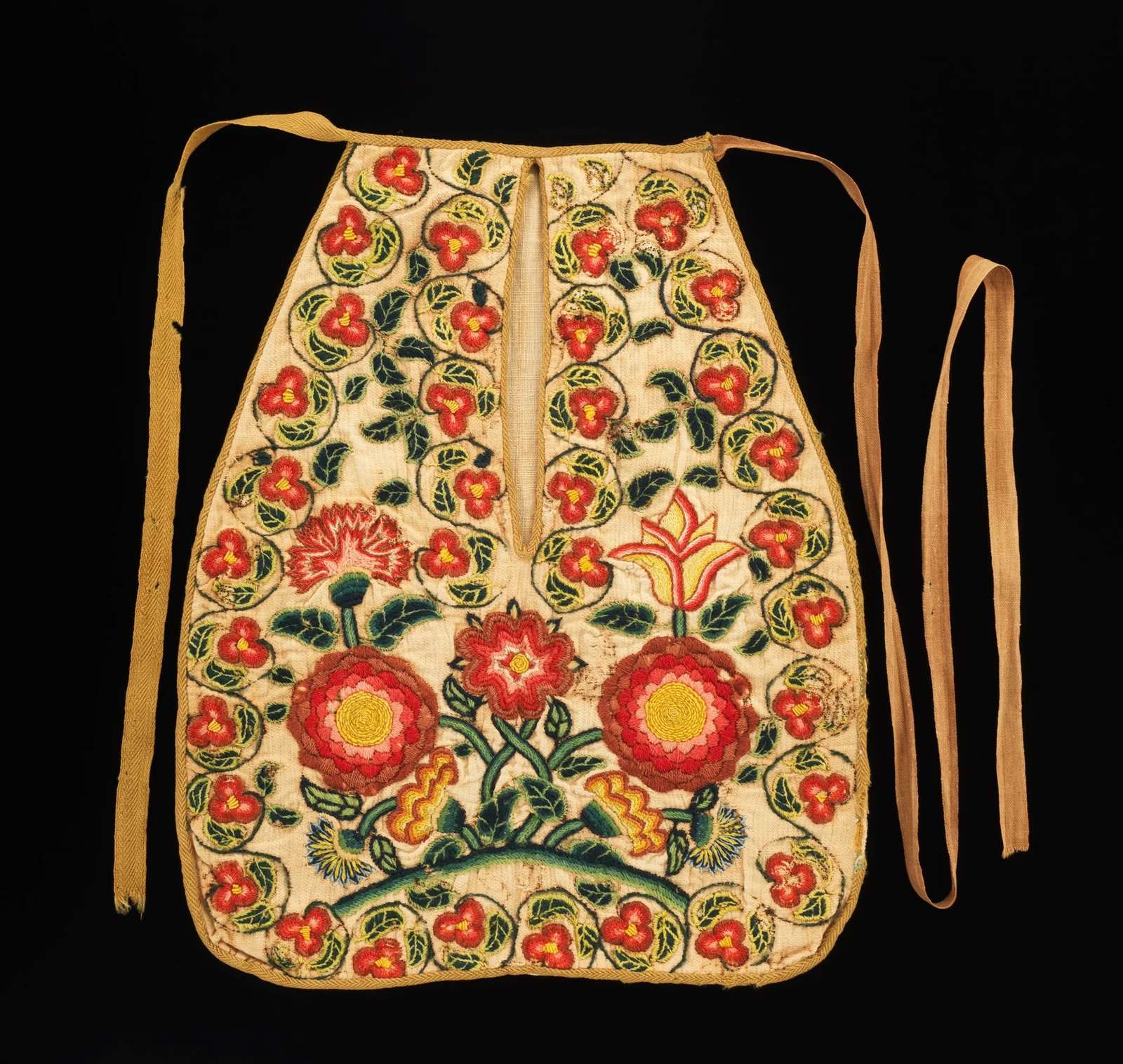
It is tempting to tell a straight story in which women lacked pockets and therefore wore chatelaines. That is too neat. Women also used roomy tie-on pockets for centuries, worn beneath or over skirts; Runway Note’s history of tie-on pockets explains how those separate textile bags worked.
The two systems solved different problems. A pocket enclosed and concealed a group of belongings. A chatelaine separated selected objects, displayed them and made them accessible without opening a bag. They could coexist because storage, access and appearance are not the same design task.
The distinction also prevents us from treating every waist-hung object as one timeless accessory. The Met notes a long history but describes specific changes in construction and contents. Even the name needs care: museums may use “chatelaine” for objects from different places and periods whose local names and meanings were not identical.
How to read a museum chatelaine
- Find the attachment. Look for the hook, clip, chain or clasp that connected the object to dress. A catalogue photograph may show the back separately.
- Inventory what survives. Identify cases before guessing their contents. Empty hooks and mismatched chains can show that a set changed over time.
- Separate function from symbolism. Keys may suggest household responsibility, but an object record, ownership history or portrait is needed before assigning a particular role to a particular wearer.
- Check scale. Museum images often remove the body. Dimensions reveal whether an object was a compact cluster or a long cascade reaching down the skirt.
- Read the material. Silver, enamel, cut steel, leather and textile pouches produce different weight, sound, care needs and visual effects.
For more methods for looking at dated objects without turning an impression into a claim, continue through Runway Note’s fit and fabrics reading route and the guide to museum fashion research.
The accessory made organisation ornamental
The chatelaine’s enduring interest lies in the way it refuses a modern separation between tool and jewel. Its chains organised work; its metalwork framed that organisation as dress. The contents could communicate sewing, writing, nursing, household management or personal care, but they also created rhythm and shine at the waist.
Rather than calling it simply a Victorian Swiss Army knife, look at the design decision underneath the comparison: small necessities were not placed in one anonymous container. They were edited into a visible set. A chatelaine made the tools of a day part of how a person appeared.
Sources & further looking
The Metropolitan Museum of Art — Chatelaine, fourth quarter 19th centuryVictoria and Albert Museum — A guide to metalworking techniquesLondon Museum — Chatelaine, object 33.186Canadian Museum of History — ChatelaineHistorical, material and collection references are linked above. Styling exercises and interpretations are our editorial suggestions.
Continue with the style notes guides, or read our editorial policy.