Vittoria Ceretti’s March 2026 Paris street-style outfit offers an unusually specific starting point for relaxed tailoring. Instead of treating “effortless” as an explanation, look at the individual choices: the direction of a pinstripe, the placement of a knitted layer, the shape of a flat shoe and the interruption of a baseball cap.
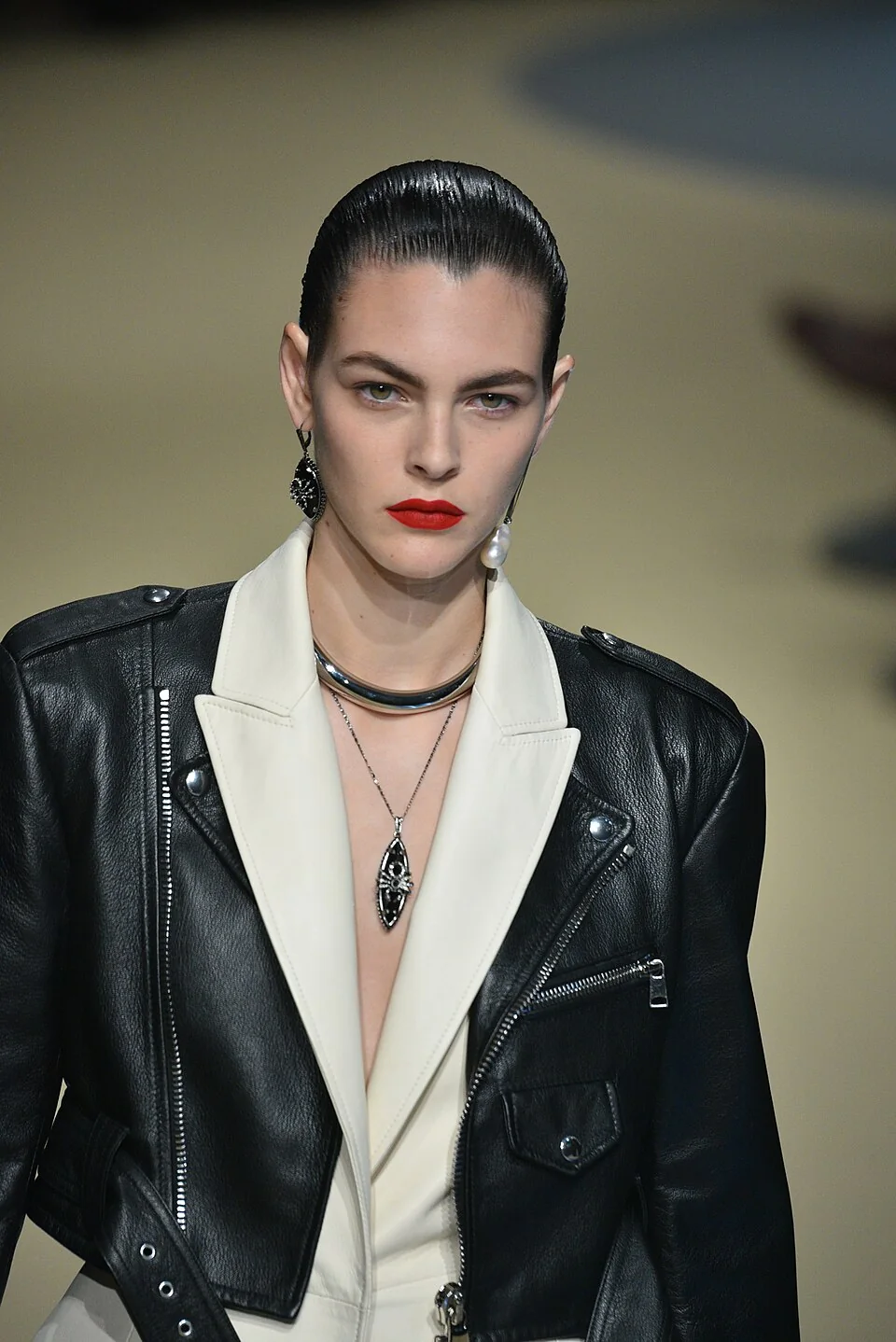
The photograph above shows Ceretti modelling an Alexander McQueen runway look in 2018. It is archival collection imagery, not her own off-duty outfit. The Vogue Italia report linked below contains the street-style reference for this guide.
The documented Paris look
On 7 March 2026, Vogue Italia described Ceretti during Paris Fashion Week in low-rise, straight pinstriped trousers, a charcoal shirt and a matching knit tied over her shoulders. Black Repetto ballet flats and a New York Yankees cap completed the combination. Its interest lies in how everyday accessories change the reading of tailored trousers.
We can study that relationship without buying the same brands or adopting a low rise. A trouser rise is a fit preference, not a requirement for this exercise. Choose a pair that feels secure when you sit and move, then use the upper layers and shoes to test how formal or relaxed it feels.
Use the stripe as a line, not a label
Pinstripes offer a repeated vertical rhythm. The effect changes with the spacing of the stripes, the contrast against the background and the amount of fabric at the hem. A narrow pale stripe on charcoal can appear nearly solid at a distance; a bold stripe remains visible across a room.
If you own pinstriped trousers, take one photograph close enough to see the fabric and another showing the complete outfit. Compare what is noticeable in each. If you only have plain trousers, use the crease or side seam as your line instead. The point is to recognise how the garment hangs, rather than to treat a particular pattern as compulsory.
Give the knitted layer a practical job
A knit tied over the shoulders adds another edge and a little volume above the shirt. Try it loosely first and check that it stays put without feeling tight at the neck. If you need to keep adjusting it, wear it normally, carry it or leave it out. An outfit detail that works for a brief photograph may be inconvenient for a commute.
For a tonal version, place two grey pieces next to each other in daylight. One may look blue, brown or green beside the other. You can embrace that difference, but noticing it helps you decide whether the pairing feels intentional to you. Texture can provide contrast when the colours are close: a smooth shirt against a visibly knitted surface is one possible combination.
Check the meeting point between trouser and flat
A low shoe exposes the relationship between the trouser hem and the ground. Put on the flats you actually intend to wear before assessing the length. Check the back of the hem as well as the front; fabric that looks tidy from one angle may drag behind the heel.
A temporary fold can help you compare a clean edge with a slight break. Avoid assuming that the exact length in a street photograph will work with your own trousers, shoe shape or walking conditions. For a fuller checklist, read trouser break and shoes.
Change one accessory and read the result
The cap in the reported outfit creates a casual reference beside tailoring. To test the principle, make three versions of the same clothes: no hat, a cap, then a different everyday accessory you use. Notice whether the change feels natural or simply decorative. You might prefer the simplest version.
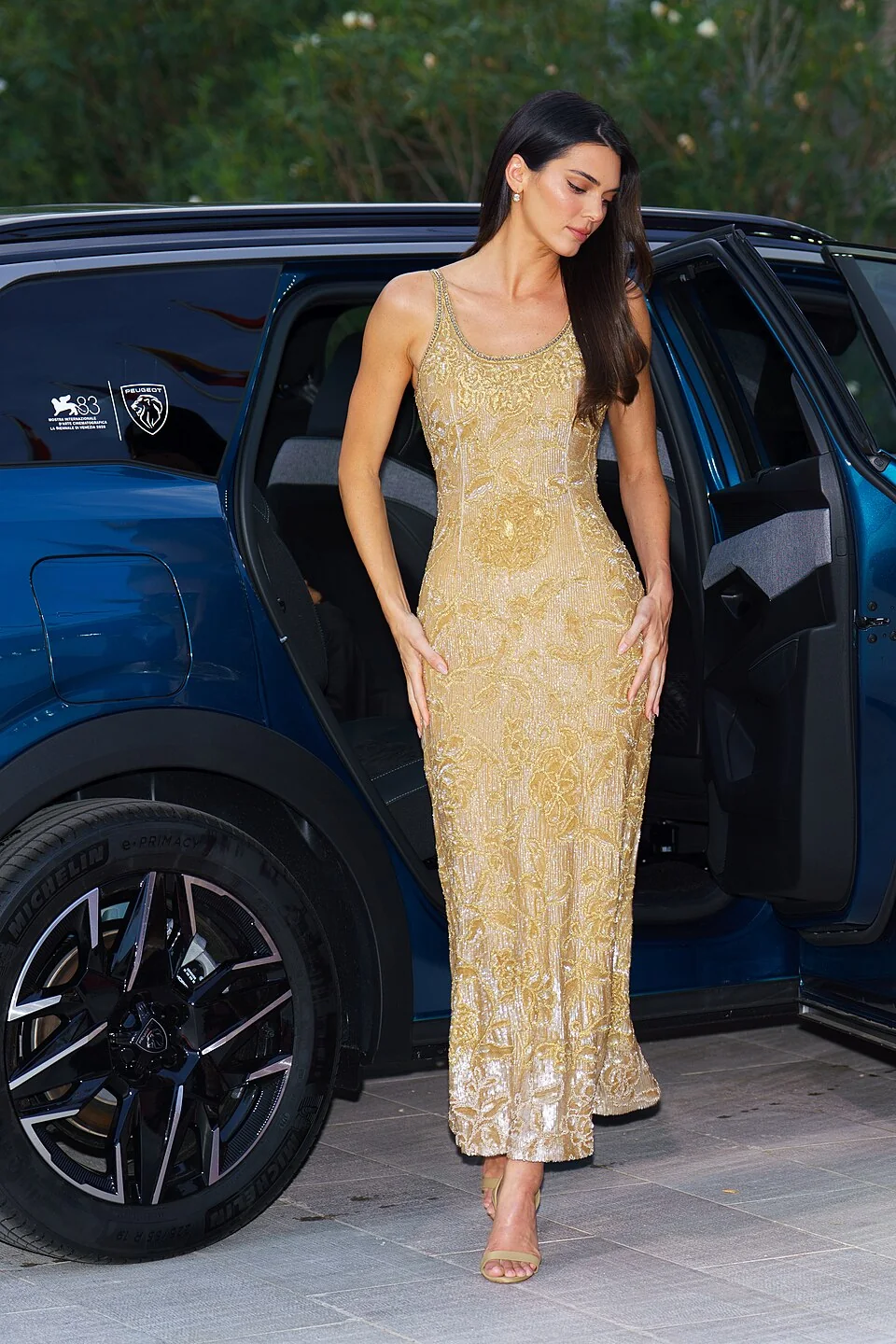
This is also a useful way to avoid turning a model’s photographed outfit into a shopping prescription. Keep the idea that helps you—tonal layers, a soft shoe with tailoring, or a casual accessory—and leave the rest. Compare Kendall Jenner’s jacket-and-denim proportions for a different balance of structure and softness.
Sources & further looking
Vogue Italia — Vittoria Ceretti’s pinstriped trousers and ballet flats, Hannah Jackson and Barbara Amadasi, 7 March 2026Historical, material and collection references are linked above. Styling exercises and interpretations are our editorial suggestions.
Continue with the celebrity style guides, or read our editorial policy.