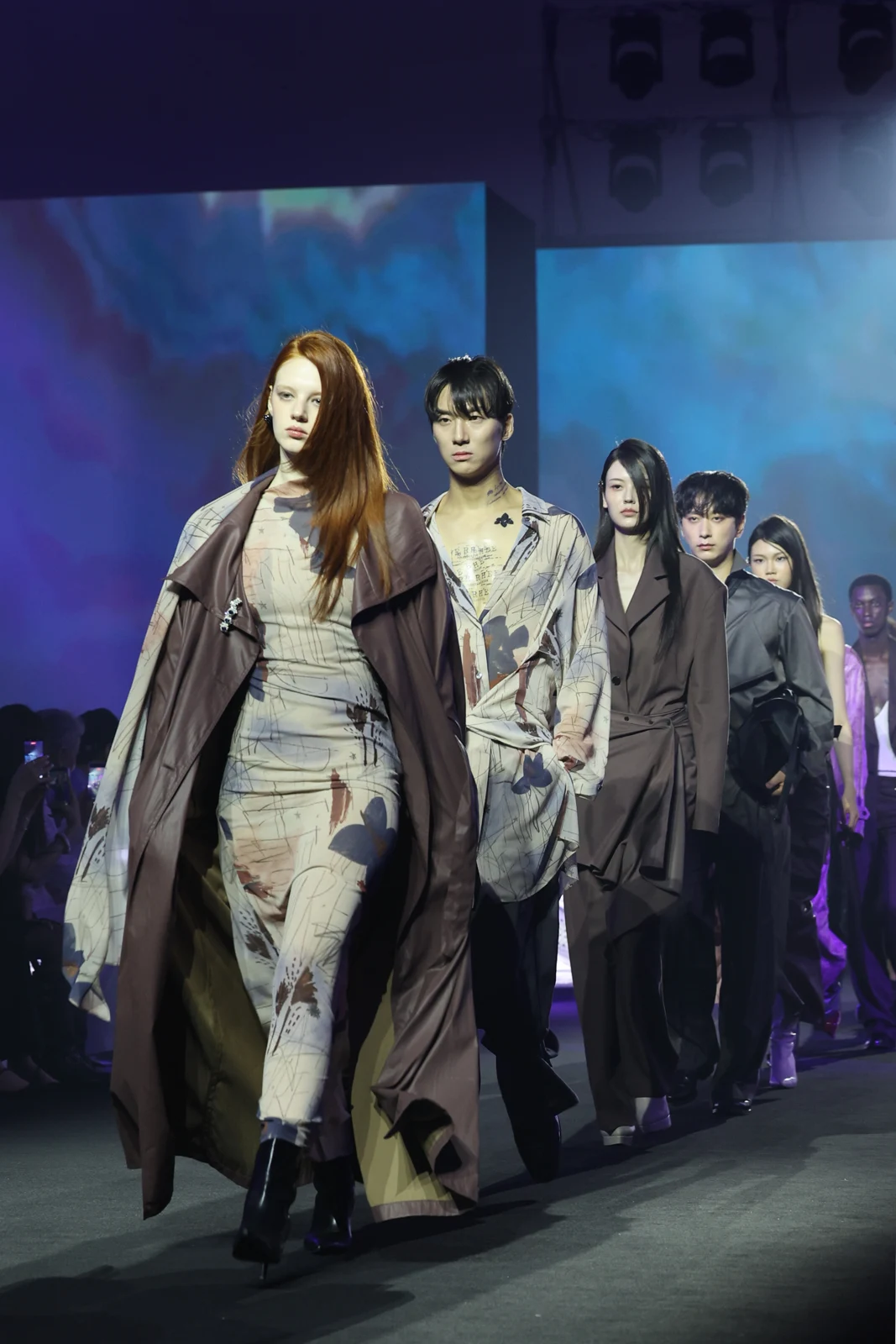
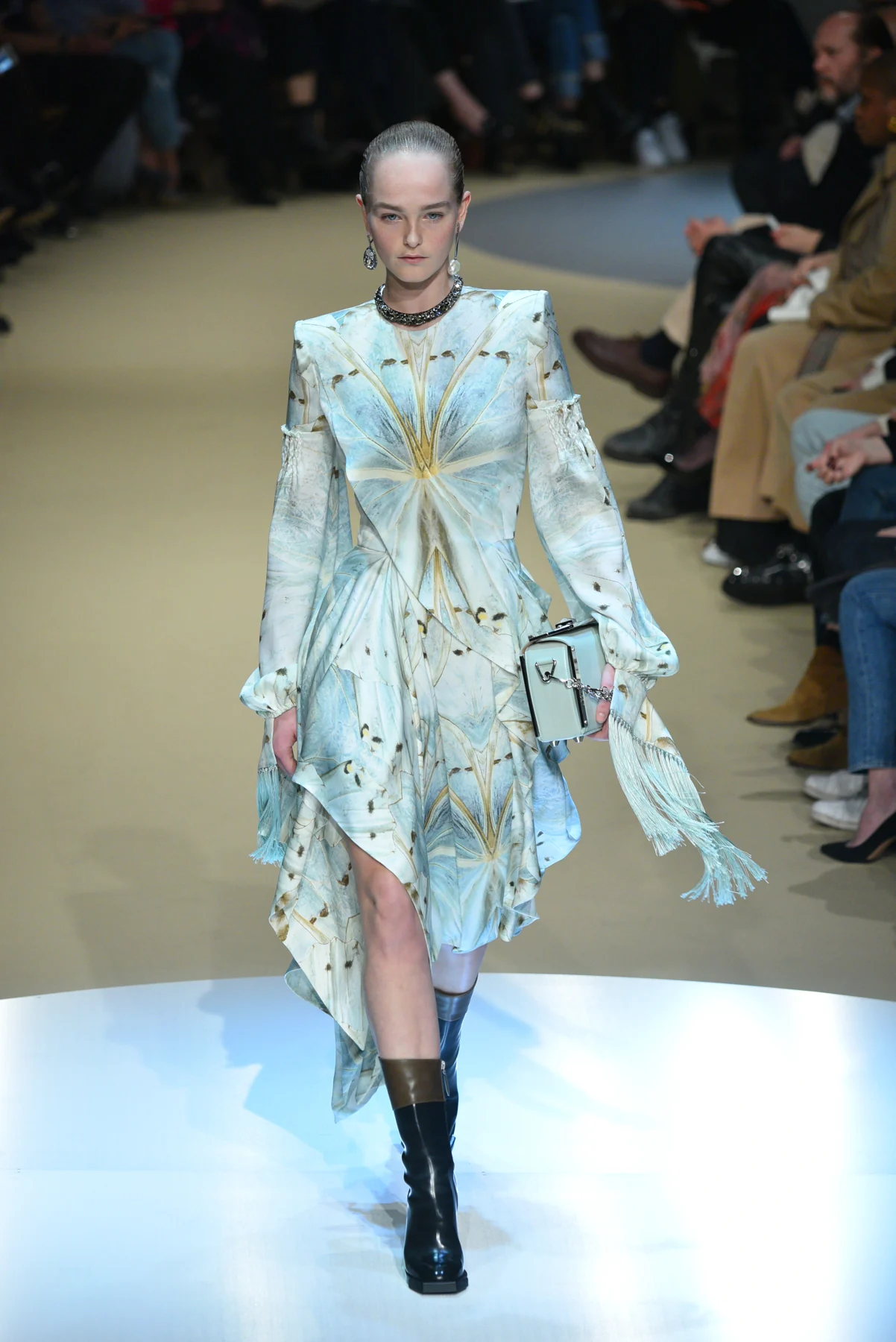
Presented in the 2026 show cycle, Prada’s Spring/Summer 2027 collection concentrates on the skirt. The house’s notes describe changing its materials, fastenings and relationship to other garments while keeping a recognisable form as a starting point.
Decorative fastening systems and unexpected material treatments complicate the distinction between function and ornament. Our interest is in the discipline of the exercise: how much can change when one part of the outfit remains consistent?
What the house actually changes
Prada's collection notes call the skirt a fixed starting form, then describe changes in closure, surface and the pieces placed beside it. Hook-and-loop fastenings can reveal or conceal decoration as a skirt changes shape; enlarged snaps become jewelled details. The notes also discuss crinoline moving from hidden internal structure to a visible layer. These are documented design choices, not guesses based on a distant photograph.
That gives a more precise question than “Is the skirt trendy?” Ask which element stays recognisable and which element changes your reading. A fastening that is both practical and decorative, for example, makes you notice an everyday mechanism as part of the design. Material can play the same trick: the official notes mention industrial fabrics treated in ways associated with pleating and other familiar finishes.
A small wardrobe experiment
Choose one skirt you enjoy wearing. Pair it with a shirt, a knit and a simple sleeveless top in succession. Keep the shoes constant. Record what each combination does to the outfit’s mood rather than whether it looks more expensive.
The shirt might introduce structure around the neck and wrists. A loose knit can soften the waist. A fitted top may make the skirt’s volume more visible. These are proposed experiments, not descriptions of particular runway looks.
Then change the material relationship
If the skirt is smooth, try a textured top. If it is already richly patterned, compare a flat colour with a second pattern that repeats one shade. Decide whether you want continuity or friction. Neither is automatically better.
Use a two-variable wardrobe grid
| Keep constant | Change | Notice |
|---|---|---|
| One skirt and one pair of shoes | Shirt, knit, sleeveless top | Where the visual volume collects above the waist. |
| One skirt and one top | Flat, boot, dress shoe | How the hem meets the shoe and ground. |
| One complete outfit | Only the closure or waist styling | Whether more fabric or hardware becomes visible. |
Write one sentence for each version. “The knit covers the waistband and makes the skirt read as a continuous column” is more useful than “the knit looks better”. The exercise does not require the exact skirt on the runway. It tests Prada's broader idea of exploring variation within a constraint.
Do not lose the season
The official archive lists this as Spring/Summer 2027, shown in September 2026. A 2026 show photograph is therefore not evidence that a particular skirt was already available to buy in October 2026. Separate the collection's presentation date from retail availability, and consult a product page for the latter. Our fashion-seasons guide has a short decoding table.
A useful collection does not always need dozens of unrelated ideas. It can make the familiar feel newly available. That is the invitation here: treat one garment as a starting point, and let the combinations do the thinking.
Sources & further looking
Prada — Spring/Summer 2027 collection notesHistorical, material and collection references are linked above. Styling exercises and interpretations are our editorial suggestions.
Continue with the runway guides, or read our editorial policy.