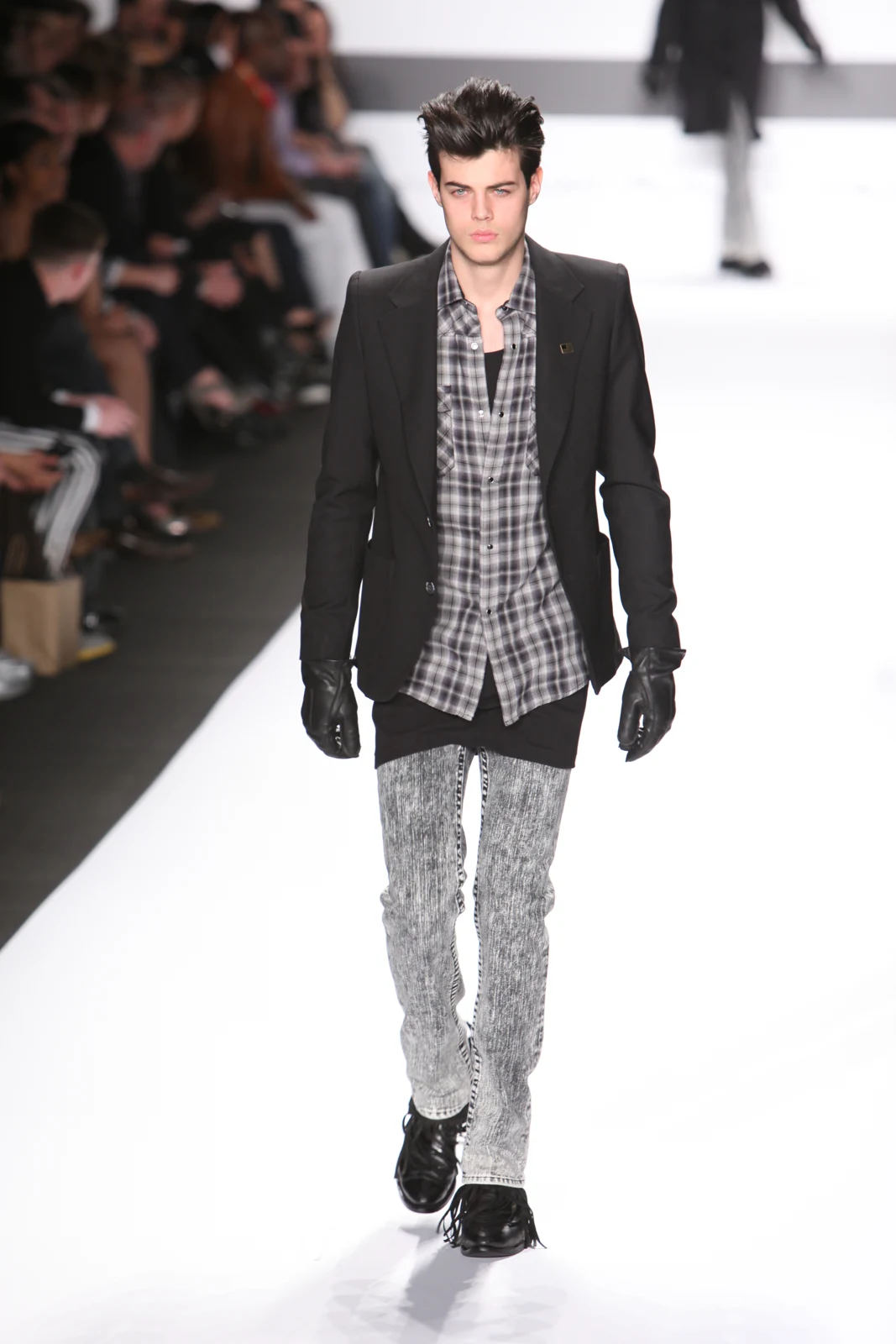
Some clothes are difficult to describe because the categories we bring to them are too narrow. If a garment is neither conventionally fitted nor simply loose, neither apparently complete nor merely unfinished, it may require a different opening question.
A museum’s framework
The Met’s 2017 exhibition Rei Kawakubo/Comme des Garçons: Art of the In-Between examined the designer’s interest in the space between boundaries. The exhibition record provides a historical framework for looking at work that questions familiar classifications. It does not mean every Comme des Garçons garment should be interpreted in the same way.
Delay the verdict
Before asking whether you would wear a look, describe what you can see. Where are the openings? Which parts sit close to the body? Where does the outline extend beyond it? Does a familiar garment category explain the whole object or only one part?
This is not an instruction to admire everything difficult. It is a way to make your judgement more informed. You may still dislike the result, but “I find the weight concentrated too strongly at the shoulder” says more than “it is strange”.
Read absence as well as presence
Sometimes the detail you expect is missing or relocated. A conventional waist, symmetrical fastening or familiar sleeve may not organise the look. Ask what takes over that role. A mass of fabric, a repeated edge or an opening can establish a different order.
Be cautious about calling something unfinished from a photograph alone. An exposed edge may be intentional, while an apparently rough surface may involve complex work. Construction evidence is stronger than a guess about effort.
Make room for a non-shopping response
A fashion image can be valuable without becoming an outfit plan. It might change the shapes you recognise, make another collection easier to understand or reveal how attached you are to a particular convention.
For a useful comparison, choose a familiar tailored look and an unfamiliar silhouette. Write the same five observations for each: outline, openings, surface, proportion and movement if documented. Use our runway checklist as a starting point. You are giving both objects the same attention, rather than assuming that only one deserves analysis.
Sources & further looking
The Met — Rei Kawakubo/Comme des Garçons: Art of the In-BetweenHistorical, material and collection references are linked above. Styling exercises and interpretations are our editorial suggestions.